


The Asian Scientist 100
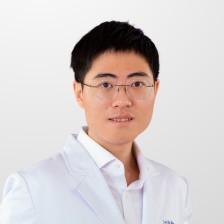
Hei Ming Lai
Institution
The Chinese University of Hong Kong
Country
Hong Kong
Field
Biomedical Sciences
Lai won the 2024 Croucher Tak Wah Mak Innovation Award for leading research in creating a 3D spatial multi-omics platform for clinical diagnostics and spatial biology research.
(Photo: The Chinese University of Hong Kong)
AWARDS
- 2024 Croucher Tak Wah Mak Innovation Award
Related articles

Neutron Beam Sniffs Out Salty Concrete
Using a neutron beam, researchers in Japan were able to detect salt embedded in concrete structures, allowing more precise assessments of structural integrity.

7 Scientists From Singapore To Watch
For a young nation, Singapore has made great advances in research, and it took the efforts of many committed, talented individuals to get here.

An Eye-Opening Stem Cell Discovery
A research group in Japan has found that different versions of a protein called laminin can cause human stem cells to become specific cell types in the eye.

WeDoctor’s Jerry Liao: Medicine For The Masses
WeDoctor founder and CEO Mr. Jerry Liao Jieyuan shares how artificial intelligence is changing the Chinese healthcare system.
Asia’s Scientific Trailblazers: Susumu Tonegawa
The sole winner of the 1987 Nobel Prize in Physiology or Medicine, Professor Susumu Tonegawa helped discover the genetic basis for antibody diversity. Today, he is spearheading research in neuroscience, seeking the biological mechanisms of memory.

Making Vaccines About Science, Not Politics
In the wake of political turmoil and widespread misinformation around Dengvaxia in the Philippines, public confidence in vaccines has plummeted sharply, says a new study. What can be done to hold back the slide?

‘Magic Soil’ Turns The Tide Against Algal Blooms
Chinese researchers have modified clay to inhibit algal blooms that threaten Chile’s aquaculture stock.

AI Automatically Sorts Cancer Cells
Researchers have developed an artificial intelligence system that can automatically differentiate between different types of cancer cells and their sensitivity to radiotherapy.

Asia’s Rising Scientists: Nguyen Thi Hiep
Dr. Nguyen Thị Hiep is on a mission to promote tissue engineering and regenerative medicine in her home country of Vietnam.