


The Asian Scientist 100
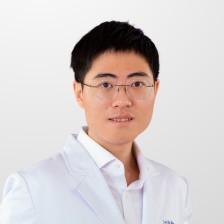
Hei Ming Lai
Institution
The Chinese University of Hong Kong
Country
Hong Kong
Field
Biomedical Sciences
Lai won the 2024 Croucher Tak Wah Mak Innovation Award for leading research in creating a 3D spatial multi-omics platform for clinical diagnostics and spatial biology research.
(Photo: The Chinese University of Hong Kong)
AWARDS
- 2024 Croucher Tak Wah Mak Innovation Award
Related articles

Asia’s Scientific Trailblazers: Urbasi Sinha
The counter-intuitive nature of quantum physics was what drew Associate Professor Urbasi Sinha to a career in science. Now, her research is paving the way for computers many times more powerful than the ones we have today.

Helping AI Embrace Empathy
Artificial intelligence is already a part of our everyday lives, but for it to truly make a difference it needs to understand human emotions, says Live with AI founder Pierre Robinet.

Blockchain’s Big Innovation: Trust
Blockchain boils down to establishing trust among disparate parties, our blockchain newbie learned at SGInnovate’s Blockchain Research and Industry Introduction Workshop.

Programming Silk For Wearable Electronics
Scientists have used calcium ions to modify silk fibroins, creating a reusable, biocompatible adhesive for electronic and pharmaceutical applications.

Drug-Resistant Bacteria Linked To Higher In-Hospital Deaths In India
An international research group has demonstrated that multi-drug resistant or extensively drug resistant bacteria are becoming a threat to public health in India.

Neutrophils Used As ‘Trojan Horse’ To Target Brain Tumors
Scientists in China have loaded immune cells with nanoparticles containing an antitumor drug for cancer therapy and imaging.

Topical Gel Protects Farmers From Toxic Pesticides
A team of scientists in India have developed a gel to protect farmers against the neurotoxic effects of pesticides.

Crab Spiders: A Pitcher Plant’s Friend Indeed
In times of scarcity, crab spiders are beneficial to the slender pitcher plants they inhabit.

Asia’s Scientific Trailblazers: Hideo Hosono
Thanks to the work of Japanese materials scientist Hideo Hosono, we now have much more efficient flat-screen TV displays.