


The Asian Scientist 100
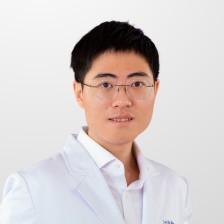
Hei Ming Lai
Institution
The Chinese University of Hong Kong
Country
Hong Kong
Field
Biomedical Sciences
Lai won the 2024 Croucher Tak Wah Mak Innovation Award for leading research in creating a 3D spatial multi-omics platform for clinical diagnostics and spatial biology research.
(Photo: The Chinese University of Hong Kong)
AWARDS
- 2024 Croucher Tak Wah Mak Innovation Award
Related articles

Decoding Cell-Specific DNA Methylation
Scientists in China have developed an algorithm that can link epigenetic modifications to specific cell types with 90 percent sensitivity.

Got Milk? These Spiders Do
Scientists have discovered a species of jumping spider that is capable of producing milk for its offspring, a trait previously thought to be unique to mammals.

Click To Conserve Breast Tissue
Being able to rapidly and accurately detect the difference between cancerous and non-cancerous breast tissue could be a boon for breast-conserving surgery.

A Pinch Of Salt May Have Started Life On Earth
Researchers have found that salt, together with ionic radiation from the environment, could have triggered the formation of complex molecules necessary for life.

Small Loans Help Increase Rice Yield In Bangladesh, Study Shows
Microfinance institutions have a positive impact on farmers, allowing them to adopt high-yield rice varieties and increase their farming output, researchers say.

Only Learn The Good Stuff—AI That Thrives On Positive Data
Japanese scientists have developed a classification strategy for artificial intelligence that allows it to form classification boundaries using only positive data.

Tsinghua University Wins Student Supercomputing Competition At SC18
A computing cluster built by students from Tsinghua University outperformed those of 14 other international teams in a variety of tasks, including parallel deep learning and weather forecasting.

7 Must-Read Stories In November 2018
This month, our articles featuring leading ladies in science were popular; news about decaffeinated tea and probiotics also drew interest.

Optimistic Realism About The Future Of Evolution
The challenges facing humanity are immense, but we have the ability to shape our own future, said distinguished speakers at the launch of Sydney Brenner’s 10-on-10: The Chronicles of Evolution.