


The Asian Scientist 100
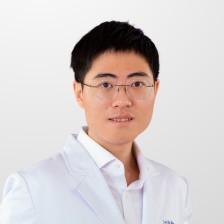
Hei Ming Lai
Institution
The Chinese University of Hong Kong
Country
Hong Kong
Field
Biomedical Sciences
Lai won the 2024 Croucher Tak Wah Mak Innovation Award for leading research in creating a 3D spatial multi-omics platform for clinical diagnostics and spatial biology research.
(Photo: The Chinese University of Hong Kong)
AWARDS
- 2024 Croucher Tak Wah Mak Innovation Award
Related articles

To Eat Or Not To Eat? The Science Behind Ten Common Food Beliefs
Nutrition expert Professor Christiani Jeyakumar Henry spills the beans on which popular food beliefs are true and which ones should be taken with a grain of salt.

The Future Of Food In Singapore
To achieve 30 percent local food production by 2030, Singapore’s most innovative minds are turning to genome editing, artificial intelligence and even microalgae-based proteins.

Severe COVID-19 Linked To Neanderthal Gene
A long stretch of DNA inherited from an interbreeding event with Neanderthals some 60,000 years ago has been linked to increase risk of severe COVID-19.
On The Cusp Of CRISPR
When Yoshizumi Ishino first encountered in 1986 the mysterious sequences that would later come to be known as CRISPR, he was as far away from the present day as he was to the discovery of the double helix. Here is the story of what has happened since then.

The Curious Case Of Asia’s COVID-19 Mortality Rates
Why is the COVID-19 death rate in Asia three times lower than that of Europe? Lim XiaoZhi examines some possible reasons.

Supercharging Healthcare Innovation
From bench to bedside, high performance computers are running simulations, crunching big data and suggesting medical treatments to make healthcare more effective and affordable.

Revving Up COVID-19 Research
With the world racing to fight the coronavirus, Asia’s most powerful supercomputers are entering the fray.

In Sickness & In Health: Married Couples Share Susceptibility To Heart Disease
Wives of men with major cardiovascular disease risk factors—namely hypertension, diabetes and dyslipidemia—are more likely to suffer from the same disorders.

Mapping The Brain’s Mysteries
Scientists across Asia are harnessing the power of synchrotrons and supercomputers to get a comprehensive understanding of the brain.