


The Asian Scientist 100
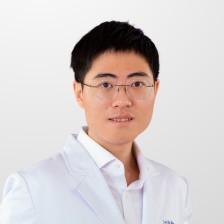
Hei Ming Lai
Institution
The Chinese University of Hong Kong
Country
Hong Kong
Field
Biomedical Sciences
Lai won the 2024 Croucher Tak Wah Mak Innovation Award for leading research in creating a 3D spatial multi-omics platform for clinical diagnostics and spatial biology research.
(Photo: The Chinese University of Hong Kong)
AWARDS
- 2024 Croucher Tak Wah Mak Innovation Award
Related articles

Asian Scientist Magazine’s 2020 Roundup
Stories of scientific breakthroughs were bright spots in a year clouded by pandemic news. Here are Asian Scientist Magazine’s top 10 pieces of 2020.

How Blind Football Players Stay On The Ball
Out of sight, out of mind? Not quite—by rotating their heads, blind footballers can accurately track incoming balls.

Playing Hide And Seek With Medicinal Plants
By blending in with its surroundings, a plant traditionally used in Chinese medicine has evolved to evade harvesting by humans.

Closing In On The Cause Of Alzheimer’s Disease
The unpredictability of Alzheimer's disease may be partly caused by changes in star-shaped cells in the brain called astrocytes, find scientists from South Korea.

How The Venus Flytrap Remembers Without A Brain
No brain? No problem! Through changes in calcium ion concentration, the Venus flytrap can store ‘memories’ of its prey.

Asia’s Scientific Trailblazers: Vivian Yam
By harnessing the unique properties of photoactive materials, Professor Vivian Yam hopes to develop processes that would utilize energy in a cheaper and more efficient manner.
Revealing The True Scale Of The Reptile Trade
Nearly 40 percent of all known reptile species are being traded illegally, researchers find.

Breathing New Life Into Old Antibiotics
Scientists in Japan have identified safer alternatives to an 80-year old antibiotic by rapidly generating and screening thousands of the drug’s structural variants.

The Electrifying Effect Of Bending Diamonds
Bending diamond nanoneedles close to their breaking point makes them behave like metals and conduct electricity.