


The Asian Scientist 100
Di Li
Institution
National Astronomical Observatories of the Chinese Academy of Sciences
Country
China
Field
Aerospace & Astronomy
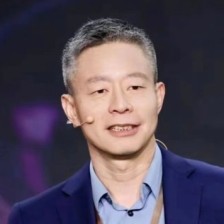
Li received the Marcel Grossmann Award for his pioneering contributions in the field of fast radio bursts. Li is the first scientist in China to receive this prize for research conducted within China.
(Photo: The Paper)
AWARDS
- Marcel Grossmann Award
Related articles

Nestlé Establishes Research Center in Singapore
The Center will focus on healthy aging and nutritional interventions for older populations, both regionally and globally.

Singaporean, Korean & Israeli Universities Form Joint Research Partnership
Nanyang Technological University, Korea Advanced Institute of Science and Technology and Technion-Israel Institute of Technology have launched a collaborative research program in emerging fields.

7 Must-Read Stories In April 2016
The Asian Scientist 100, our handpicked selection of award-winning scientists from the region, was your favorite read in April.

UNSW, Tata Consultancy To Jointly Develop Futuristic Tech
The University of New South Wales and Tata Consultancy have agreed to collaborate in the areas of machine learning, virtual reality, robotics, data analytics and cloud computing.

MERS ‘Super-Spreader’ Infected 82 People In South Korea: Study
A single ‘super-spreader’ patient in an overcrowded emergency room was linked to nearly half of the 186 MERS-infected patients in South Korea, according to researchers.

7 Must-Read Stories In March 2017
Science in Asia is on the move, from gene editing to particle physics and even robotic turtles.

Thin Films Become Superconductive At Higher Temperatures
This thin, iron-based film conducts electricity at 35°C above absolute zero without the need for doping.
Semiconductor Shows Ferromagnetism At Room Temperature
Researchers have reported growing iron-doped ferromagnetic semiconductors that work at room temperature—a longstanding physical constraint.
Researchers Crystallize Hydrogen Sulfide In Superconducting Phase
A team of Japanese researchers has unraveled the crystal structure of hydrogen sulfide, a promising superconducting material.