


The Asian Scientist 100
Di Li
Institution
National Astronomical Observatories of the Chinese Academy of Sciences
Country
China
Field
Aerospace & Astronomy
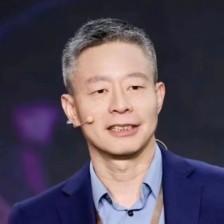
Li received the Marcel Grossmann Award for his pioneering contributions in the field of fast radio bursts. Li is the first scientist in China to receive this prize for research conducted within China.
(Photo: The Paper)
AWARDS
- Marcel Grossmann Award
Related articles
Premature Birth When Mom Lives Near A Busy Road Junction
Babies are born earlier when their mothers live near a concentration of freeways and main roads, a study of 970 mothers and their newborn babies in Brisbane has found.

Premature Babies Are Just Not That Into You
Preterm infants are less interested in people than full-term infants, suggesting atypical social development and a possible link to autism.

Baby Boys More Likely To Be Born Prematurely: Study
A new study has found that boys are much more likely to be born pre-term between 20-24 weeks, with their mothers at greater risk of pregnancy complications.

Stem Cells To Treat Lung Disease In Infants
A new study has found that it is safe and feasible to use stem cell therapies for preventing or treating lung disease in preterm infants.

Study: Probiotics Not Effective For Preventing Childhood Asthma
Taking probiotics during pregnancy or giving them to infants doesn't prevent asthma, according to a new study.

Japanese Astronauts To Drink Yakult In Space
Yakult will go where no other probiotics drink has gone before - into outer space!

Probiotics Prevents Liver Cirrhosis Complications
A clinical trial in Indian cirrhosis patients show that probiotics could help prevent the deterioration of brain function, a serious complication of late stage liver disease.

A New Spin On Quantum Measurements
Researchers have developed a method for quantifying the collective spin motions in a magnet using an elementary quantum-computing device.
Probing The Sound Of A Quantum Dot
Scientists have found out how to manipulate sound waves in quantum dots, paving the way for quantum computers in the future.