


The Asian Scientist 100
Di Li

Institution
National Astronomical Observatories of the Chinese Academy of Sciences
Country
China
Field
Aerospace & Astronomy
Li received the Marcel Grossmann Award for his pioneering contributions in the field of fast radio bursts. Li is the first scientist in China to receive this prize for research conducted within China.
(Photo: The Paper)
AWARDS
- Marcel Grossmann Award
Related articles

Seniors Care More For Strangers’ Financial Welfare, Study Finds
While young adults take more risks when making financial decisions for others, older people regard others’ financial outcomes as important as their own and therefore act more conservatively.

Study: Bidi Smoking Costs India US$12 Billion A Year
Bidi smoking cost India US$12.4 billion in ill health and early death in 2017, study shows.
AKARI Finds Signs Of Water In Asteroids
A Japanese research team has used the infrared camera aboard the AKARI satellite to detect the presence of hydrated materials inside C-type asteroids.

Chang’e-4 Makes Historic Landing On Far Side Of Moon
In a world's first, China lands its lunar probe Chang'e-4 on the far side of the moon.
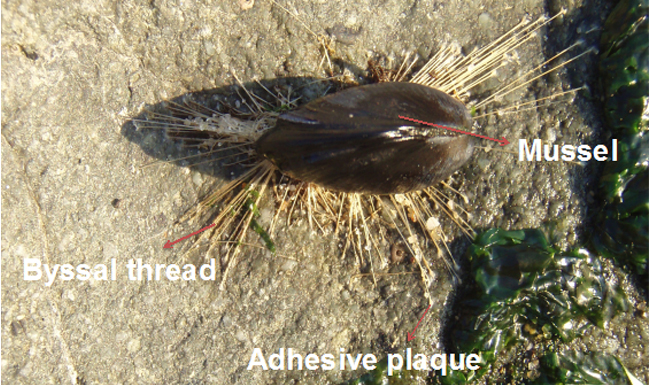
Hybrid Protein Adhesive Flexes Its Mussel
The mussel's incredible ability to adhere to surfaces has inspired a biologically active molecule that can tightly bind to titanium, which is commonly used in medical implants.

Using Nail Art To Study Ladybug Wings
High speed cameras and uv-cured resin used in nail art have come together to help scientists understand what makes ladybug wings both strong and foldable.

Losing An Arm Doesn’t Bother Starfish Bot
Drawing inspiration from starfish, scientists in Japan have developed a robot that can maintain its movement even when one of its limbs is damaged.

A Slippery Solution To A Sticky Problem
By infusing porous surfaces with slippery liquids, researchers have developed a way to prevent mussel adhesion, a key contributor to marine biofouling of ship hulls.

CAS Professor Awarded 2016 Nikkei Asia Prize
Professor Jiang Lei, director of the Technical Institute of Physics and Chemistry at the Chinese Academy of Sciences, has been awarded the 2016 Nikkei Asia Prize.