


The Asian Scientist 100
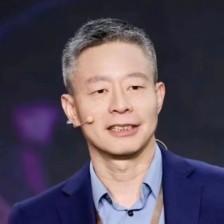
Di Li
Institution
National Astronomical Observatories of the Chinese Academy of Sciences
Country
China
Field
Aerospace & Astronomy
Li received the Marcel Grossmann Award for his pioneering contributions in the field of fast radio bursts. Li is the first scientist in China to receive this prize for research conducted within China.
(Photo: The Paper)
AWARDS
- Marcel Grossmann Award
Related articles

Asia’s Rising Scientists: Shoko Takahashi
Having founded Genequest when she was still a student, Dr. Shoko Takahashi is well on her way to creating a human genome database that could help advance clinical research in Asia.

Sound Turns Surfaces Into Touchscreens (VIDEO)
Scientists in South Korea have devised a method to use sound to locate touch on a surface, which could allow any surface to function as a touchscreen.

Study: Dirty Air Linked To Lower Worker Productivity
Prolonged exposure to pollutant particles takes a toll on the productivity of workers in China, research shows.

As PM2.5 Falls, Ozone Pollution Rises In China
Fine particulate matter in the air, while harmful for health, act as a sponge for free radicals that help produce ozone, according to research by scientists in China and the US.

China Approves Tyvyt For Hodgkin’s Lymphoma
Sintilimab, a fully human anti-PD-1 therapeutic monoclonal antibody, was co-discovered by Innovent and Adimab and jointly developed by Innovent and Eli Lilly in China.

7 Must-Read Stories In December 2018
From diagnosing disease to exploring the far side of the moon, these were the seven most popular stories in December 2018.
Jackie Ying Receives 2018 TÜBA Academy Prize
Professor Jackie Y. Ying is the first woman to receive the TÜBA Academy Prize in the Science and Engineering Sciences category.

Parasite Eyes Inspire Ultrathin Camera
Researchers in South Korea have engineered an ultrathin digital camera based on the eye structure of Xenos peckii, a type of wasp parasite.

Two Types Of Qubits Are Better Than One
Using two different types of qubits with complementary properties, an international group of scientists are hoping to help make quantum computing scalable.