


The Asian Scientist 100
Di Li
Institution
National Astronomical Observatories of the Chinese Academy of Sciences
Country
China
Field
Aerospace & Astronomy
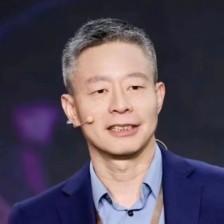
Li received the Marcel Grossmann Award for his pioneering contributions in the field of fast radio bursts. Li is the first scientist in China to receive this prize for research conducted within China.
(Photo: The Paper)
AWARDS
- Marcel Grossmann Award
Related articles

Taking Solid-State Batteries To The Next Level
Using complex hydrides, a research group in Japan has demonstrated the possibility of building high-energy-density all-solid-state batteries with capacity exceeding 2,500 Wh/kg.

Supercomputing Shouldn’t Be Rocket Science
Given the rapid pace of data generation, supercomputers are fast becoming an indispensable tool for research—now the challenge is to help scientists use them.

Spotting Cancer Cells In Lymph Nodes
By injecting contrast agent into upstream lymph nodes, scientists in Japan were able to detect cancer cells within the lymphatic system early on.

Coffee May Inhibit Prostate Cancer Growth, Scientists Find
Kahweol acetate and cafestol found in coffee may slow down the progression of prostate cancer, say researchers in Japan.

So You Want To Be A Clinician-Entrepreneur?
It may be the road less travelled, but becoming a clinician-entrepreneur is a rewarding career that more doctors should consider, says Professor Lawrence Ho.

This Program Gives Students A Real-Life Glimpse Into Deep Tech
SGInnovate’s Summation Programme alumnus Gabriel Wong shares how the apprenticeship has helped him better understand the field of deep tech.

Detecting Two Drugs In A Single Fingermark
Scientists in China have developed biological fluorescent probes that can detect ketamine and amphetamine in a single fingerprint using a one-step test.

A Tango With Quantum Entanglement
Scientists have created a 'universal entangler' which not only could advance our understanding of the quantum realm, but also pave the way for the construction of quantum computers.

7 Must-Read Stories In February 2019
February 2019 also saw dynamic shifts in scientific leadership and business, but quantum computers and quantum communication dominated the conversation.