


IN THE LAB

Enzyme ‘Snitches’ On Cancer Cells To The Immune System
By cutting DNA in the nucleus of a cancer cell, the enzyme MUS81 reveals their location to immune cells, triggering an attack.

Space Dust Reveals Earth’s Ancient Atmosphere
By analyzing fossil micrometeorites, or space dust, scientists can turn back time to 2.7 billion years ago.

Reading Your Opponent’s Face In Martial Arts Could Help You Win
In taekwondo, the ability to analyze facial emotions could give you an edge in a sparring match.

Helping Lab-On-A-Chip Devices To ‘Swallow’ With Electro-Osmosis
Mimicking how muscles push food down the esophagus allows microdevices to move fluids; adding an electric field helps to further control this motion.

Predicting Earthquakes From Underground ‘Ultrasounds’ (VIDEO)
By pairing vibrational pulses with seismic sensors, researchers have developed a method to detect faults deep below the Earth's surface and predict future earthquakes.
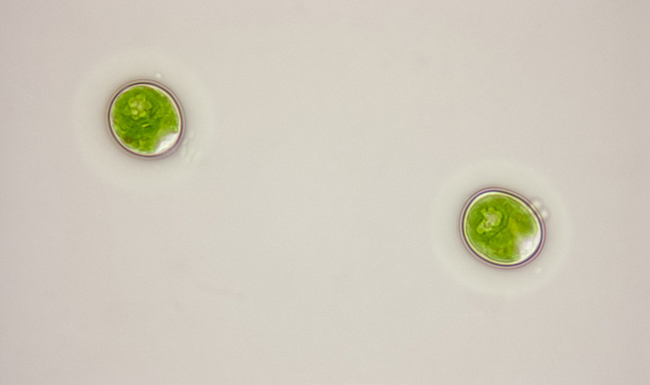
Green Algae Chase Light With The Help Of ‘Eyespots’
Clusters of pigment called ‘eyespots’ on the surface of the unicellular algae, Chlamydomonas reinhardtii, help it identify which direction light is coming from.
Semiconductor Shows Ferromagnetism At Room Temperature
Researchers have reported growing iron-doped ferromagnetic semiconductors that work at room temperature—a longstanding physical constraint.

‘Hammerhead’ Dinosaur Is The Oldest Herbivorous Marine Reptile
Atopodentatus unicus lived 242 million years ago and used its needle-like side teeth to filter-feed, much like a whale's baleen.

Lettuce Grown Under LED Lights Have Lower Nitrates
To grow lettuce with more antioxidants and less nitrates, simply expose to continuous red-blue and green LED light for 24 hours.


