Ka Yi Ling

Institution
Shiok Meats

Country
Singapore

Field
Sustainability

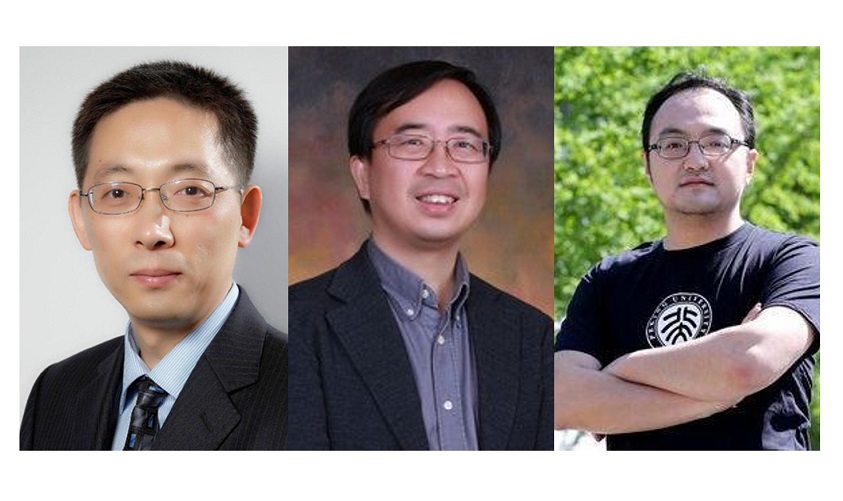
Ling and Sriram were co-recipients of the Nikkei Asia Award for their work developing stem-cell based alternative seafood with their company Shiok Meats. Founded in 2018, the company also addresses overfishing and environmental damage caused by fish farm construction. Formerly scientists at Singapore’s Agency for Science, Technology and Research, both Sriram and Ling hope to use their technology to offer sustainable, environment-friendly, cruelty-free healthy food to people all over the world. So far, the team has been able to raise about S$30 million in investments from across Asia. The company hopes to scale up and reduce the cost of its products to provide accessible alternative meat.

(Photo: Shiok Meats)

AWARDS
  • Nikkei Asia Award

Related articles

Going 2D To Keep Chips Shrinking

By using a single material that can act as both a metal and a semiconductor, scientists in Korea have produced the first 2D field-electric transistor.

Whose Job Is It To Prepare Us For 2037?

A distinguished panel at the 2017 Milken Institute Asia Summit discussed what the future of jobs will look like as automation and machine learning become the norm.

How To Work With Other Scientists

What’s the best and worst thing about working with a biologist, chemist, physicist, mathematician and an engineer?

A Non-Antibiotic Drug To Fight MRSA

By screening 50,000 compounds, scientists have discovered a non-antibiotic drug that makes multidrug-resistant bacteria more vulnerable to immune clearance.

A Systematic Approach To Cancer Drug Resistance

Using a systems biology approach, researchers in South Korea have developed a treatment that overcomes liver cancer resistance to targeted therapy.

Finding The Right Spot For Hindlimbs

Scientists in Japan have identified a protein that controls the position of hindlimbs in tetrapods.

Tracing The Apple’s Journey Along The Silk Road

By analyzing the genomes of 117 apple varieties, scientists have traced the origin of the domesticated apple and identified key genetic markers for improving apple quality.

One Step Closer To A One-Time, Universal Influenza Vaccine

A robust, early CD8+ T-cell response is associated with a faster recovery from H7N9 influenza infections.

Highly Efficient CRISPR Knock-In Developed

Using a modified CRISPR-Cas9 system, researchers have developed an efficient way to knock-in genes in mice.