


The Asian Scientist 100
Di Li

Institution
National Astronomical Observatories of the Chinese Academy of Sciences
Country
China
Field
Aerospace & Astronomy
Li received the Marcel Grossmann Award for his pioneering contributions in the field of fast radio bursts. Li is the first scientist in China to receive this prize for research conducted within China.
(Photo: The Paper)
AWARDS
- Marcel Grossmann Award
Related articles
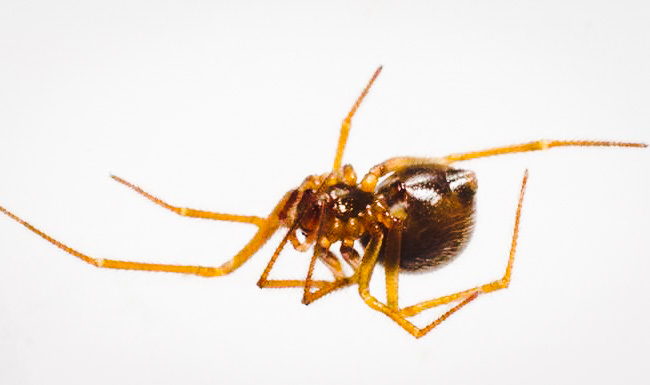
43 New Species Of Scaffold Web Spider Discovered In Asia
Try not to run screaming in the other direction. This discovery increases the number of known scaffold web spider species by 20 percent.

Singapore To Build Offshore Clean Tech Power Grid System
Southeast Asia's first large-scale offshore renewable energy system will integrate solar, wind, tidal, diesel, and power-to-gas technologies.

Micrometer-sized Silicon Electrodes To Study The Brain
Researchers in Japan have developed tiny, micrometer-scale needle-electrode devices to record and analyze the brain's electrical activity.

This Gene Is Responsible For Autumn’s Colors
Researchers have learned how a gene called Stay-Green turns leaves from green to rich oranges, yellows and reds during fall.

This Is What The Sky Looks Like In Radio Wave Technicolor
The GLEAM telescope, located deep in the West Australian outback, lets us peek into what the Universe would look like if human eyes could see in 20 primary colors.

CD72: A Potential Target For Treating Autoimmune Disease
Scientists have identified a molecule that blocks the immune system from mistakenly reacting with itself.

Like Dolly The Sheep, Quantum Information Can Also Be Cloned
Scientists in Australia have produced near-perfect clones of quantum information using a new method to surpass previous cloning limits.

Where In The Brain Does Depression Hide?
This study shows that depression affects the part of the brain which is implicated in non-reward, the lateral orbitofrontal cortex.

How Saturn Put A Ring On It
What are the distinctive rings of Saturn, Neptune and Uranus made of? The fragments of nearby large objects that were destroyed by tidal forces.