


The Asian Scientist 100
Di Li

Institution
National Astronomical Observatories of the Chinese Academy of Sciences
Country
China
Field
Aerospace & Astronomy
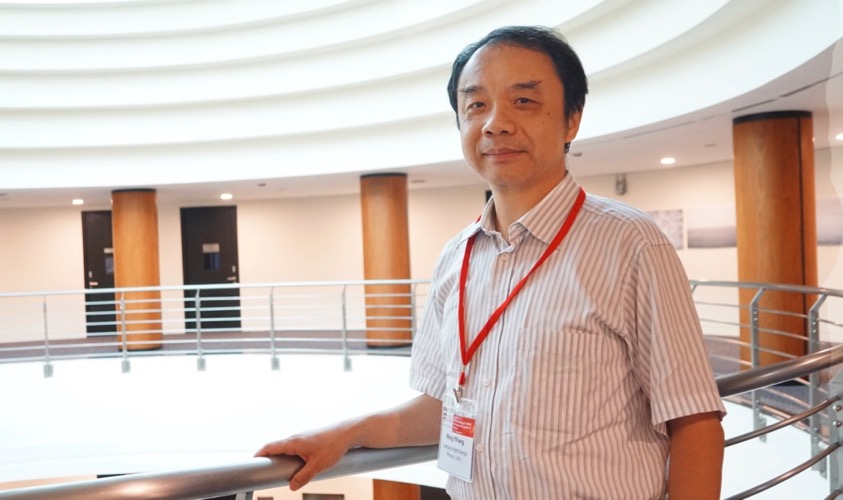
Li received the Marcel Grossmann Award for his pioneering contributions in the field of fast radio bursts. Li is the first scientist in China to receive this prize for research conducted within China.
(Photo: The Paper)
AWARDS
- Marcel Grossmann Award
Related articles

Detecting Amphetamines On The Spot
Scientists in Korea have developed a fast, sensitive and portable sensor for on-site detection of amphetamines in urine.
Asia’s Scientific Trailblazers: Wang Yifang
Professor Wang Yifang shares about his fascination with neutrinos and elaborates on China’s ambition to become a major international center for particle physics research.

The Risks Of Consuming Adulterated Chinese Medicine
Scientists in Hong Kong have demonstrated that proprietary Chinese medicines contain a range of substances that can have adverse effects on health.

10 Scientists Awarded The 2017 Shanti Swarup Bhatnagar Prize
Ten scientists under the age of 45 were honored for their significant contributions to science and technology with the prestigious Shanti Swarup Bhatnagar Prize.

Sniffing Out Why Alzheimer’s Patients Lose Their Sense Of Smell
The loss of smell is indicative of early stage Alzheimer’s disease, and Korean researchers now understand how this happens.
Clearbridge BioMedics Joins CANCER-ID Consortium
Clearbridge BioMedics is the first Asian biotechnology company to join the CANCER-ID consortium for blood-based biomarker evaluation.

Three Scientists Honored With Future Science Prize
The second edition of the Future Science Prize featured a new prize category and saw three scientists awarded with US$1,000,000 each.

Crossing The Gut To Avoid Injections
Using a screening technique known as phage display, scientists have identified three small intestine-permeable peptides that can improve the absorption of drugs in gut.

Optogenetics Study Upends Decades Of Parkinson’s Research
Contrary to earlier assumptions, Parkinson’s disease symptoms are caused by hyperactivity rather than suppressed activation of a brain region known as the thalamus.