


The Asian Scientist 100
Di Li

Institution
National Astronomical Observatories of the Chinese Academy of Sciences
Country
China
Field
Aerospace & Astronomy
Li received the Marcel Grossmann Award for his pioneering contributions in the field of fast radio bursts. Li is the first scientist in China to receive this prize for research conducted within China.
(Photo: The Paper)
AWARDS
- Marcel Grossmann Award
Related articles

How A Leap Of Faith Can Take Science Forward
A new study by SMU Associate Professor Reddi Kotha reveals that language choices alone can influence whether inventors receive financial backing from their organizations.
UN: Asia-Pacific Unlikely To Hit Any SDG Target By 2030
A new UN report finds that many Sustainable Development Goal targets related to the environment and natural resources are registering negative trends.

Zuellig Pharma Acquires Singapore Healthcare Startup Klinify
Zuellig Pharma has acquired Singapore-based healthtech startup Klinify for an undisclosed amount.
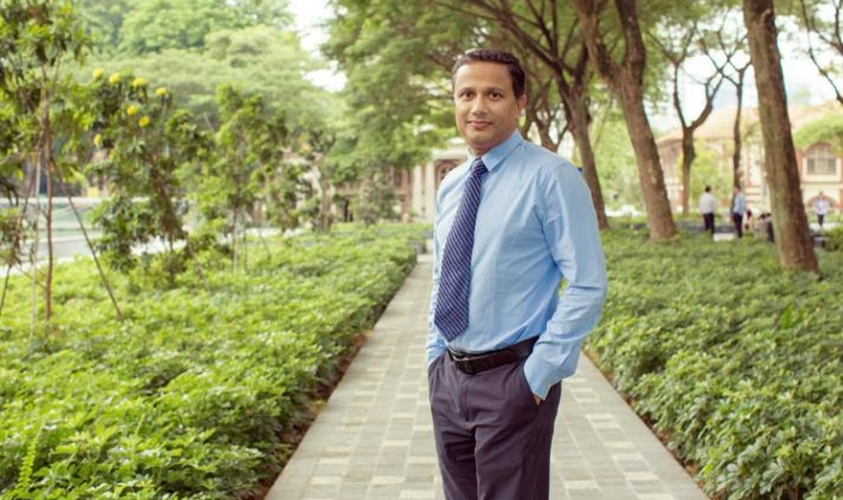
Scientist To Develop Sustainable Man-Machine Interaction Intelligence
The NRF Investigatorship grant will support SMU Professor Archan Misra’s vision of a smart city where humans and devices work collaboratively on projects.

SMU Researcher To Study Religious Diversity In Singapore
SMU Assistant Professor Orlando Woods is studying new types of religious pluralism in Singapore – the differences that exist not just between but also within religious groups.

Singapore: A Sentinel For Southeast Asian Seafood Safety (VIDEO)
What we learnt from the unprecedented 2015 GBS outbreak and its implications for food safety in Southeast Asia.
A Tool For Rapid Diagnosis Of Parkinson’s Disease
Researchers in Japan have developed a fast, accurate and fully automated device that can measure the extent of α-synuclein aggregation in the cerebrospinal fluid of patients with Parkinson's disease.
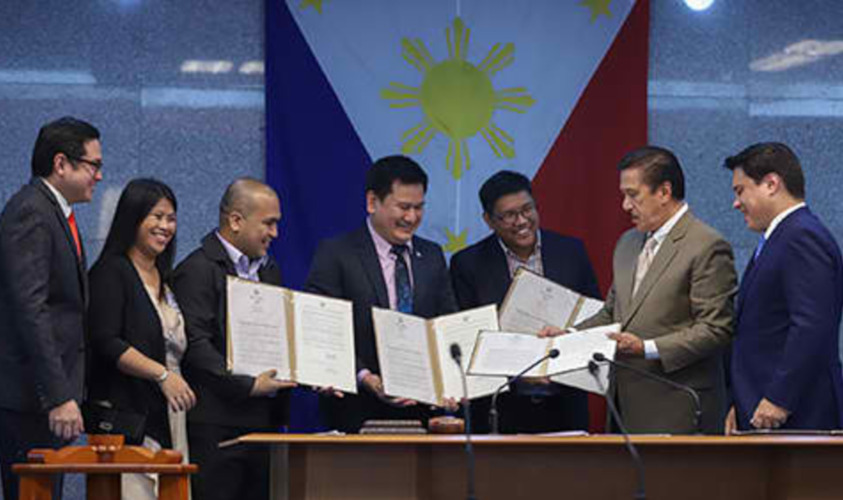
Philippine Senate Adopts Resolution Honoring Filipinos On Asian Scientist 100 List
The Senate of the Philippines has adopted a resolution that commends eight Filipino scientists who were part of the Asian Scientist 100 list (2018 edition).

Nanotech Researcher Wins 2019 ACS Nano Lectureship Award
Liu Bin received the 2019 ACS Nano Lectureship Award for Asia Pacific for her research into the design and synthesis of organic nanomaterials.