


The Asian Scientist 100
Di Li

Institution
National Astronomical Observatories of the Chinese Academy of Sciences
Country
China
Field
Aerospace & Astronomy
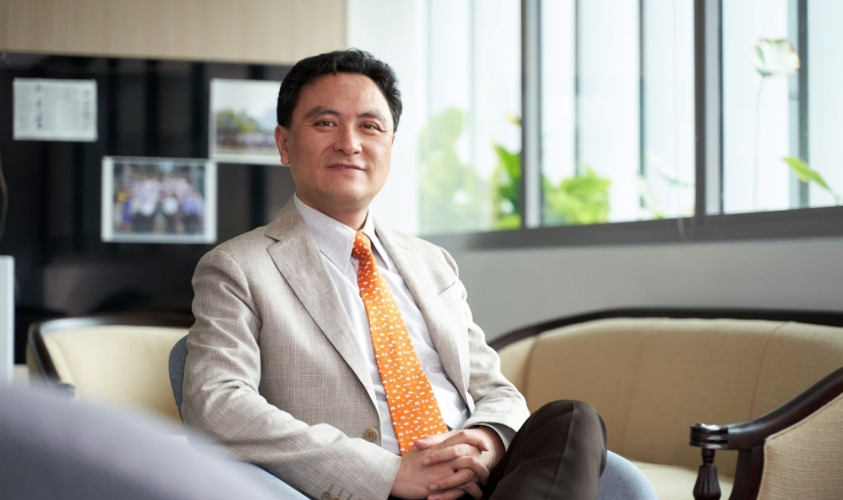
Li received the Marcel Grossmann Award for his pioneering contributions in the field of fast radio bursts. Li is the first scientist in China to receive this prize for research conducted within China.
(Photo: The Paper)
AWARDS
- Marcel Grossmann Award
Related articles

Engineering Self-Repairing Rechargeable Batteries
Stacking faults that occur in the material Na2RuO3 during charge-discharge cycles can be repaired due to a force known as coulombic attraction.

Taking Image Guided Therapy To Greater Heights
The Philips Azurion 7 C20 with FlexArm augments image guided therapy workflows and grants medical teams unprecedented flexibility in hybrid operating rooms.

Bringing Businesses Back From The Brink
A panel of experts at the SMU-Cambridge roundtable on corporate insolvency law discussed how Singapore’s ‘Omnibus Bill’ could position Singapore as a hub for corporate debt restructuring.

What Makes Companies Care?
Both the legal system and the ownership structure of a company influence how likely it is to engage in corporate social responsibility, says SMU Assistant Professor Liang Hao.

To Tackle Child Labor, Start With Consumers
A new study by SMU Assistant Professor Fang Xin finds evidence that educating consumers about the social impact of their purchases can help reduce child labour in global supply chains.
Perspectives On Performance And Accountability
SMU Assistant Professor Zhang Wei seeks to uncover and explain the real-world impacts of legal systems and corporate governance frameworks.

Finding New Angles On Analysts
Financial analysts don’t work in silos – their predictions are influenced by a variety of factors, including the presence of experienced macroeconomists within their firms, says Assistant Professor Lin An-Ping of the SMU School of Accountancy.

Asia’s “Father of Aquaculture” Wins 24th Nikkei Asia Prize
Taiwanese shrimp farming pioneer Liao I-chiu won in the science and technology category for his contributions to the development of aquaculture in Asia.

Japan’s KUROSHIO Emerges 2nd In Ocean-Mapping XPRIZE (VIDEO)
A team of Japanese researchers took home US$1m and claimed the runner-up position in this year’s Shell Ocean Discovery XPRIZE.