


The Asian Scientist 100
Di Li
Institution
National Astronomical Observatories of the Chinese Academy of Sciences
Country
China
Field
Aerospace & Astronomy
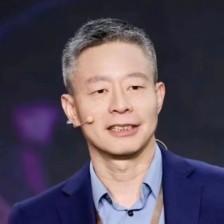
Li received the Marcel Grossmann Award for his pioneering contributions in the field of fast radio bursts. Li is the first scientist in China to receive this prize for research conducted within China.
(Photo: The Paper)
AWARDS
- Marcel Grossmann Award
Related articles

Children And Superspreaders As Transmitters Of COVID-19
Most people infected with COVID-19 did not transmit the disease, but those that did tended to be superspreaders, according to a large study conducted in India.

Conquering One Outbreak After Another (VIDEO)
Leading viral immunologist Professor Lisa Ng is leveraging modern tools in the age-old battle against disease-causing pathogens.

Tackling Triple Negative Breast Cancer
Targeting a cytokine called IL-34 could help patients with a drug-resistant form of breast cancer known as triple negative breast cancer.

AI Boosts Biomaterials Design
Machine learning can now predict the properties of hypothetical materials with great accuracy, paving the way for AI-enabled materials design.

On The Cusp Of CRISPR
When Yoshizumi Ishino first encountered in 1986 the mysterious sequences that would later come to be known as CRISPR, he was as far away from the present day as he was to the discovery of the double helix. Here is the story of what has happened since then.

The Curious Case Of Asia’s COVID-19 Mortality Rates
Why is the COVID-19 death rate in Asia three times lower than that of Europe? Lim XiaoZhi examines some possible reasons.

Squeezing Synthetic Oil From A Stone
Scientists in Japan have used a boron-based reaction to create synthetic oil at room temperature, paving the way for greener oil production.

Singapore Patient Plasma Used To Create Trump’s COVID-19 Antibody Cocktail
The antibody cocktail used to treat US President Donald Trump was developed from patient samples from Singapore.

Supercharging Healthcare Innovation
From bench to bedside, high performance computers are running simulations, crunching big data and suggesting medical treatments to make healthcare more effective and affordable.