


The Asian Scientist 100
Can Li

Institution
University of Hong Kong
Country
Hong Kong
Field
Engineering
Li is a recipient of the 2023 Croucher Tak Wah Mak Innovation Award for his research exploring the limitations of digital computers in performing tasks accomplished by the human brain, including recognising faces, reasoning based on vague information, and learning from experience.
(Photo: University of Hong Kong)
AWARDS
- 2023 Croucher Tak Wah Mak Innovation Award
Related articles

Studying Animals To Improve Human Health
Research into animals, both common and obscure, are yielding insights into human health that are not always expected, writes Shuzhen Sim.
Chinese CDC Study Finds High Risk Features Of H7N9 Virus
A new study from the Chinese CDC suggests that the H7N9 influenza A virus possesses a suite of biological features that may be a serious threat to humans.

Struggle To Explain Bird Flu’s Spread To Humans
Researchers studying the bird flu are looking for conditions that could lead to human transmission.

Traditional Japanese Pickle Called Suguki May Protect Against Flu
Bacteria found in a traditional Japanese pickle can prevent infection by the flu virus in mice, according to a new study.

Study: China Should Consider National Flu Vaccination Plan
Scientists suggest that China should tailor its influenza vaccination strategies to account for its three distinct flu regions.
Influenza Virus Breaks Through Protective Mucus Net During Infection
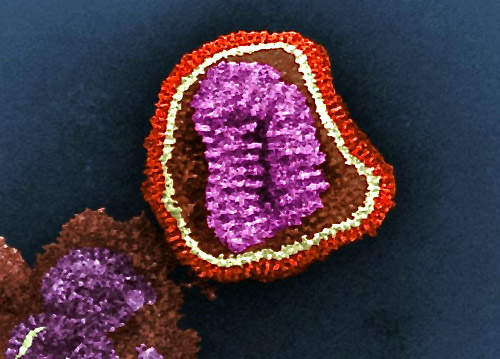
Researchers have shown how influenza A viruses snip through a protective mucus net to both infect respiratory cells and later cut their way out to infect other cells.

Genetic Marker Predicts Severity Of H7N9 Flu, Study
Researchers have discovered a genetic marker that can accurately predict which patients will experience more severe H7N9 flu.

Some Indigenous Groups More Vulnerable To H7N9 Viruses
Researchers have discovered that some indigenous groups will be more susceptible to the effects of the new strain of H7N9 influenza in China.

Small Non-Coding RNAs Can Cross The Placenta, Scientists Say
Researchers claim that small exogenous RNAs from plants eaten by a mother can cross the placenta and affect fetal development.