AsianScientist (Nov. 29, 2013) – China should tailor its influenza vaccination strategies to account for its three distinct flu regions, according to a study of the country’s flu patterns conducted by a research team of Chinese and American scientists.
While China introduced seasonal influenza vaccination in 1998, only about two percent of the population is routinely immunized. Although health workers in Beijing and a few other cities now vaccinate older adults and school-age children against flu, the country has yet to initiate a country-wide plan.
Flu season in northern China occurs during the same period as in the world’s other northern temperate zones, but in the south the disease peaks in the spring, while patterns in a third, intermediate zone are complex and require more research, according to researchers from the Chinese Centers for Disease Control and Prevention and Fogarty International Center in the US.
“This research suggests the need for staggered timing of vaccination in three broad epidemiological regions,” said Dr. Cecile Viboud, a co-author on the study.
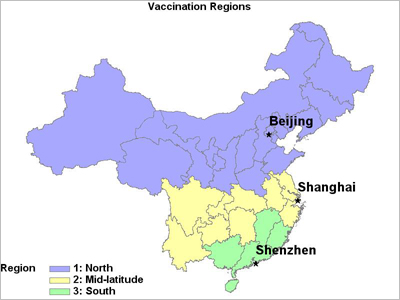
The research identifies three regions for influenza vaccination in China: Annual vaccination campaigns should be initiated in October-November in Northern China (purple) and in February-March in Southern China (green) to accommodate local seasonal influenza activity. In the mid-latitude region around Shanghai (yellow), the optimal timing of vaccination is complicated by semi-annual influenza activity and should be clarified based on further research.
Immunity stimulated by current flu vaccines tends to decay within four to eight months, so it is vital for people to be vaccinated in the months immediately preceding flu season, the authors noted.
The study, published in PLOS Medicine, was based on samples collected from participating hospitals in cities in each of China’s 30 provinces from 2005-2011. Statistical analyses enabled the researchers to designate three epidemiologically distinct flu regions.
The article can be found at: Yu H et al. (2013) Characterization of Regional Influenza Seasonality Patterns in China and Implications for Vaccination Strategies: Spatio-Temporal Modeling of Surveillance Data.
——
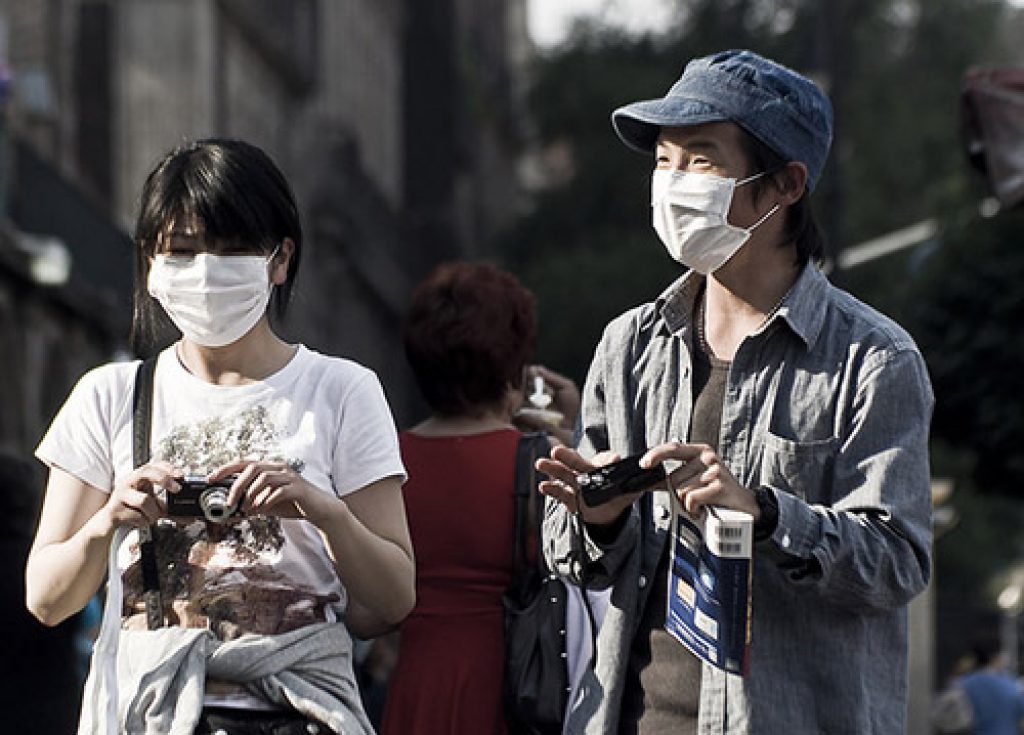
Source: Fogarty International Center; Photo: sarihuella/Flickr/CC.
Disclaimer: This article does not necessarily reflect the views of AsianScientist or its staff.