


The Asian Scientist 100
Can Li

Institution
University of Hong Kong
Country
Hong Kong
Field
Engineering
Li is a recipient of the 2023 Croucher Tak Wah Mak Innovation Award for his research exploring the limitations of digital computers in performing tasks accomplished by the human brain, including recognising faces, reasoning based on vague information, and learning from experience.
(Photo: University of Hong Kong)
AWARDS
- 2023 Croucher Tak Wah Mak Innovation Award
Related articles

Turning Tobacco Stalks Into Cellulose Nanopaper
Chinese scientists have fabricated cellulose nanopaper with improved tensile strength and water resistance from tobacco stalks.

Fighting Parkinson’s Disease With Stem Cells
Dopaminergic neurons derived from human embryonic stem cells have been shown to alleviate the symptoms of Parkinson’s disease in monkeys.

Tracking Down A Better Vision Test
Singapore-based startup BetaSight wants to turn eye-tracking VR headsets—originally designed for gaming—into medtech devices that can monitor eye and neurological health.

Meteorite Hints At Hidden Water On The Moon
The discovery of moganite in a lunar meteorite found in northwestern Africa suggests that water may be abundant on the Moon.
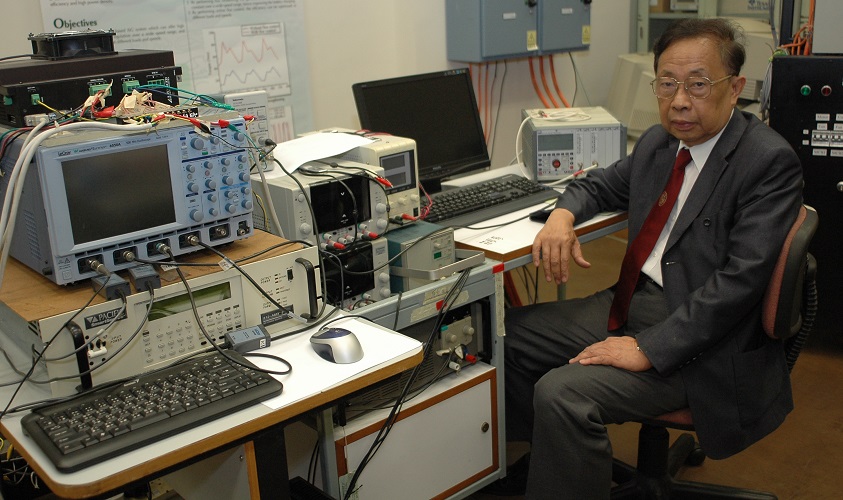
Asia’s Scientific Trailblazers: C. C. Chan
A pioneer in electric vehicle research, Professor C. C. Chan shares how a conducive ecosystem can be created for the future of mobility.

Asia’s Scientific Trailblazers: Jenny Su
For Professor Jenny Su, president of Taiwan’s National Cheng Kung University, universities have a social responsibility to respond to national and global crises.

Asia’s Rising Scientists: Yan Ning
Rather than let the shells of crabs and lobsters go to waste, Assistant Professor Yan Ning pioneered the field of ‘shell biorefinery’ to upcycle crustacean shells.

For MERS, Two Drugs Are Better Than One
Scientists have identified two drugs that, when combined, prevented the replication of Middle East respiratory syndrome coronavirus in human lung tissue.

How Patients With Alzheimer’s Disease Hide Their Forgetfulness
A research group at Kumamoto University, Japan, has found that patients suffering from Alzheimer’s disease often engage in face-saving behaviour to hide their loss of memory.