


The Asian Scientist 100
Xie Yi
Professor
Institution
University of Science and Technology of China
Country
China
Field
Chemistry
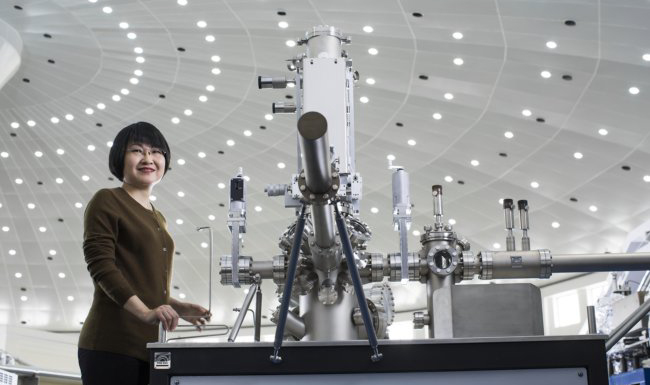
Xie was honored with a L’Oréal-UNESCO For Women in Science Award in 2015 for creating new nanomaterials with promising applications in the conversion of heat or sunlight into electricity.
(Photo: L’Oréal)
Related articles

Building A Diverse Portfolio Of Financial Research
Now in its tenth year, the Sim Kee Boon Institute for Financial Economics has nurtured a plethora of real world-focused research initiatives and training programs.

The Universe’s Oldest Supernovae Burn Bright & Blue
The color of supernovae during a specific phase could help researchers detect the most distant and oldest supernovae in the Universe.

China’s Coral Crisis
Coral abundance around mainland China and Hainan Island has declined by at least 80 percent over the past 30 years. Can anything be done to stop this trend?
5 Steps To Prevent Zika Virus Infection
Here are five practical steps you can take to protect yourself and your family members against Zika infections.

Building Smart Cities, Brick By Digital Brick
Alongside concrete, granite and steel, digital technologies have now become an integral part of a city’s foundations, said keynote speakers at the 2017 International Conference on Information and Knowledge Management.

Giving AI A Fair Trial
Society must carefully weigh the merits and potential pitfalls of advanced AI that can do the work of junior lawyers, make judicial decisions and influence human behavior, said experts at SMU’s Future of Law Conference.

Celebrating Excellence in Asia With The Asian Scientist 100
These rising stars and veterans hail from diverse sectors in industry and academia, but they all share in one common mission—to make tomorrow a better place for you and me.

Asia’s Rising Scientists: Vidita Vaidya
Neuroscientist Vidita Vaidya is most interested in learning how stress in its many forms affects the brain and how it functions.

Could The Cosmos Be A Collider?
The cosmos and elementary particles—the largest and smallest objects studied by physicists—are intricately linked.