


The Asian Scientist 100
Yan Ning
Institution
National University of Singapore
Country
Singapore
Field
Environmental Sciences & Geology
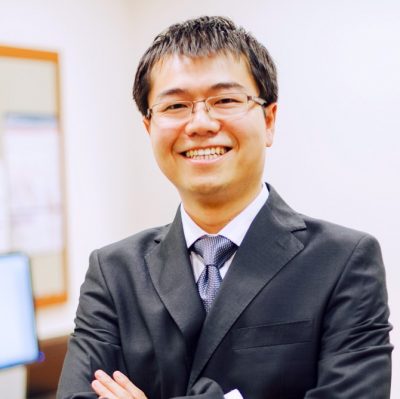
For his research on harvesting materials from waste through rational catalytic design, Yan was awarded the 2017 Environment, Sustainability and Energy Division Early Career Award.
(Photo: National University of Singapore)
AWARDS
- 2017 Environment, Sustainability and Energy Division Early Career Award
Related articles

The Women Of The Asian Scientist 100 (VIDEO)
From the co-discoverer of carbon nanotubes to the first Chinese woman to win a Nobel Prize, here are the 15 female scientists featured on the AS100 list.

Predicting Earthquakes From Underground ‘Ultrasounds’ (VIDEO)
By pairing vibrational pulses with seismic sensors, researchers have developed a method to detect faults deep below the Earth's surface and predict future earthquakes.

Google Lunar XPRIZE: Asia’s Teams Shoot For The Moon
Three teams from Asia are racing to win in the 2016 Google Lunar XPRIZE competition.

Sorrento, 3SBio Enter Immunotherapy Joint Venture In China
The joint venture agreement will develop and commercialize proprietary immunotherapies using chimeric antigen receptor T-cell technology.

Biomaterials ‘Spin’ Doctor
In somewhat of a happy accident, Teoh Swee Hin was inspired by a pregnant graduate student to develop a cell bioreactor that rotates like a baby in the mother’s womb.

Baby Elephants Thrive When Grandma Helps Out
Elephant calves have better chances of survival when their grandmothers help out, an Asian elephant study has revealed.

Why Are Asians So Good At Maths And Science?
Asian universities are constantly coming up tops in international rankings. Is there a science to why Asian students excel academically?

A Bird’s Eye View Of Ancient Human Migration
Even when no genetic information is available, the prehistoric movements of people can be simulated using current topographical satellite data.

ISRO: The Frugal Frontier
India spent less money on their entire satellite navigation network than the Europeans overspent on the Galileo project. Just how are they pulling this off?