


The Asian Scientist 100
Tan Eng King
Institution
National Neuroscience Institute
Country
Singapore
Field
Life Sciences
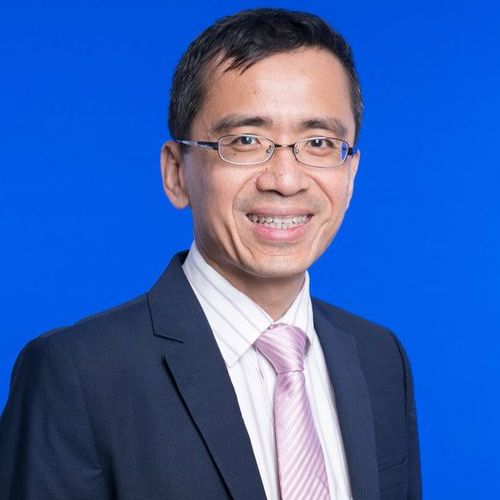
Tan Eng King received the 2018 President’s Science Award for identifying clinical biomarkers, developing novel models and transforming patient care in Parkinson’s Disease. (Photo: National Neuroscience Institute)
Related articles

Innovation In The Pink Of Health: Trends & Tech In Healthcare
Burdened by chronic disease and aging populations, the healthcare sector is looking to technology to prevent, diagnose and treat illnesses more efficiently.

Three Individuals Recognized For Contributions To HPC
The SCA18 Awards recognize excellence in high performance computing, networking, storage and visualization from Asia.

Four Researchers From Asia Receive L’Oréal-UNESCO Awards
The L’Oréal-UNESCO International Awards For Women in Science acknowledge outstanding women who are pushing the frontiers of science, technology, engineering and mathematics.

Sodium May Replace Lithium In Rechargeable Batteries
Combining computational and experimental approaches, scientists in Japan have identified a compound that boosts sodium-ion battery performance.

Rajesh Balan Named ACM Distinguished Member
Associate Professor Rajesh Balan is the only academic from Southeast Asia to be selected as an ACM Distinguished Member in 2018.

Is It Possible For AI To Be Ethical?
Given the complexities of human morality, it might be impossible to design ethical AI; but developers should nonetheless always be alert to potential biases.

NAE Welcomes Three Scientists From Asia
A director of a pharmaceutical company, a power engineer and a water treatment technologist from Asia are among the members elected to the US’ National Academy of Engineering in 2019.

Wrapping DHA In Corn Protein Enhances Absorption
Using edible corn protein, scientists have encapsulated docosahexaenoic acid to increase its absorption in both maternal mice and their offspring.

Old Age, New Tech
As the silver tsunami hits shores across the globe, robots and other assistive technologies are being deployed to meet the needs of the elderly.