


The Asian Scientist 100
Tan Eng King
Institution
National Neuroscience Institute
Country
Singapore
Field
Life Sciences
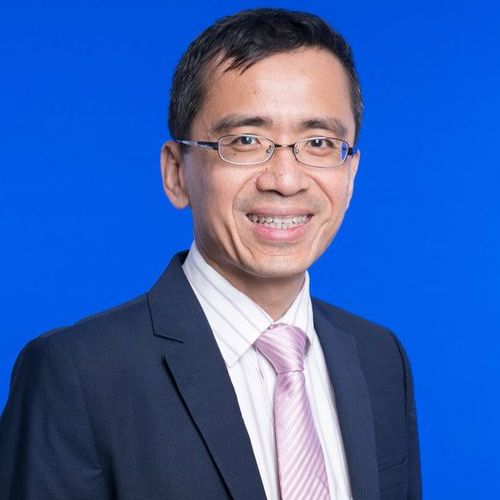
Tan Eng King received the 2018 President’s Science Award for identifying clinical biomarkers, developing novel models and transforming patient care in Parkinson’s Disease. (Photo: National Neuroscience Institute)
Related articles

Asia’s Rising Scientists: Benjamin Tee
Benjamin Tee develops electronic skin which can sense mechanical forces and self-heal repeatably—particularly useful for robotics and prosthetics.

A Radical Way To Purify Water Using Light
Instead of relying on metal-based catalysts to purify water, researchers in China have developed graphitic carbon nitride sheets that do not create secondary pollution.
Asia’s Scientific Trailblazers: Eugene Fitzgerald
Newly-appointed CEO of the Singapore-MIT Alliance for Research and Technology Professor Eugene Fitzgerald lists his priorities for the R&D center.

Asia’s Scientific Trailblazers: Bang Yung-Jue
On the frontlines of gastric cancer research, Professor Bang Yung-Jue is hoping to expand the arsenal of anticancer drugs and prolong patients’ lives.

The Philippines Soon To Have Its Own Space Agency
Once established the Philippine Space Agency will take care of all national issues and activities related to space science and technology applications in the country.

Nanoparticles May Cause Blood Vessel Leakiness
Nanoparticles made from specific materials may widen the gap between cells that make up blood vessels, with implications for cancer metastasis.

Asia’s Scientific Trailblazers: Hiroshi Iwasaki
Professor Hiroshi Iwasaki, who first fell in love with molecular biology in the ‘classical’ era of Watson and Crick, believes that scientists should now embrace the technical revolution to advance the field.
Asia’s Scientific Trailblazers: Han Seung Soo
Han Seung Soo, the UN special envoy for disaster risk reduction and water, seeks to create greater awareness water-related disasters.

NVIDIA Bolsters Singapore’s AI Ambitions
Singapore gets an AI boost with the launch of the Future Talents Program and AI.Platform@NSCC.