


The Asian Scientist 100
Long Ran
Institution
University of Science and Technology of China
Country
China
Field
Chemistry
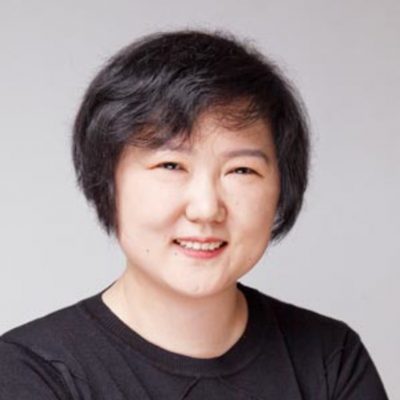
Long won the 2017 L’Oréal UNESCO For Women in Science International Rising Talent award for her research on photocatalysts for carbon dioxide reduction.
(Photo: L’oréal Foundation)
AWARDS
- 2017 LOréal-UNESCO For Women in Science International Rising Talent Award
Related articles

Asia’s Rising Scientists: Benjamin Tee
Benjamin Tee develops electronic skin which can sense mechanical forces and self-heal repeatably—particularly useful for robotics and prosthetics.
Supercapacitors Stabilized By Graphene Mesosponges
A continuous three-dimensional framework of graphene known as a mesosponge can be used to make supercapacitors more stable.
Asia’s Scientific Trailblazers: Eugene Fitzgerald
Newly-appointed CEO of the Singapore-MIT Alliance for Research and Technology Professor Eugene Fitzgerald lists his priorities for the R&D center.

Asia’s Scientific Trailblazers: Bang Yung-Jue
On the frontlines of gastric cancer research, Professor Bang Yung-Jue is hoping to expand the arsenal of anticancer drugs and prolong patients’ lives.

The Philippines Soon To Have Its Own Space Agency
Once established the Philippine Space Agency will take care of all national issues and activities related to space science and technology applications in the country.
Teasing Out The Three Subtypes Of Liver Cancer
By combining genomic data with information about patients’ immunological status, scientists in Japan can now better characterize hepatocellular carcinoma.

Riding The HPC Wave
Supercomputers are useful in practically every stage of the oil production process. Here are five ways they play a role in the oil and gas industry.

Supercomputers Take To The Sea
The advent of powerful supercomputers represents a sea change for computational fluid dynamics, a field which is helping scientists and engineers demystify the inner workings of the ocean.
Computing In The Cosmos
Supercomputing Asia talks to Hewlett Packard Enterprise’s Dr. Goh Eng Lim about the company’s supercomputer that is boldly going where no supercomputer has gone before.