


The Asian Scientist 100
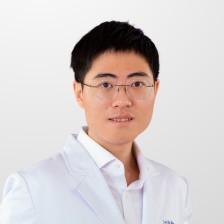
Hei Ming Lai
Institution
The Chinese University of Hong Kong
Country
Hong Kong
Field
Biomedical Sciences
Lai won the 2024 Croucher Tak Wah Mak Innovation Award for leading research in creating a 3D spatial multi-omics platform for clinical diagnostics and spatial biology research.
(Photo: The Chinese University of Hong Kong)
AWARDS
- 2024 Croucher Tak Wah Mak Innovation Award
Related articles

AI Gets Physical
Robots are to artificial intelligence what bodies are to brains. Assistant Professor Pham Quang Cuong, a roboticist at Nanyang Technological University, Singapore, is helping AI impact the physical world.

A Robotic Brain Surgeon That Works Inside An MRI Machine
A research team in Hong Kong has designed a neurosurgical robotic system capable of performing bilateral stereotactic neurosurgery inside an MRI machine.

Five Asian Companies Named WEF Technology Pioneers In 2018
Five companies in Asia have joined a global community of technology pioneers in recognition of their potentially world-changing innovations and technologies.

Hopping Around The Color Spectrum (VIDEO)
Scientists have drawn inspiration from frogs to develop a composite material that can display a wide range of colors.
Why Refrigerated Bananas Smell Different
A research group in China has identified two transcription factors involved in odorous compound synthesis that are downregulated in refrigerated bananas.

So You Want To Land That Data Science Internship? Here’s What You Need To Know
Having good technical skills alone is not enough to set you apart from the competition, said a panel of employers and current interns.

10 Unsolved Questions In Neuroscience
The mind still holds many mysteries today. Here, we uncover what we know about ten of them.
The Secret Of Sequential Thinking
Researchers have discovered ‘event cells’ in the brain's hippocampus that can sequentially organize memories for events as well as places.

Autophagy Linked To Morphine Addiction
By studying mice that were repeatedly administered with morphine, scientists in China have identified autophagy pathways in neurons as crucial mediators of drug addiction.