


The Asian Scientist 100
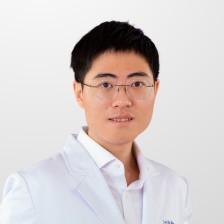
Hei Ming Lai
Institution
The Chinese University of Hong Kong
Country
Hong Kong
Field
Biomedical Sciences
Lai won the 2024 Croucher Tak Wah Mak Innovation Award for leading research in creating a 3D spatial multi-omics platform for clinical diagnostics and spatial biology research.
(Photo: The Chinese University of Hong Kong)
AWARDS
- 2024 Croucher Tak Wah Mak Innovation Award
Related articles
How Bats Carry Viruses But Avoid Getting Sick
Bats tolerate viral infections by dampening inflammation, according to research by an international team of scientists.

Scientists Decode The Genome Of The Pacific White Shrimp
The Pacific white shrimp's genome spans approximately 1.66 Gb and contains 25,596 protein-coding genes.

Scientists Discover New Shrub Species In Myanmar
The flowers of the Agapetes reflexiloba have a distinctive striped pattern and bloom in December.

Recognizing Scientific Excellence With The Asian Scientist 100
These early career scientists and veteran researchers of the Asian Scientist 100 are making waves in diverse sectors of academia and industry, shedding light on natural phenomena and developing new technologies for a better world.
2018 Edition Of The Asian Scientist 100 List Announced
Asia is a hotbed for cutting-edge research, and these scientists of the Asian Scientist 100 are making waves in the region and around the world.

Asia’s Rising Scientists: Xue Shifeng
Using frogs and fish as model organisms, Dr. Xue Shifeng is shedding light on some of the most fundamental processes in developmental biology.

Indonesia’s Deadly 2018 Quake Was A Rare Supershear
Scientists in the US have identified the Palu earthquake in Indonesia as a supershear, a particularly destructive form of seismic movement.

Malaria Parasites May Skew Sex Ratio To Survive
Plasmodium vivax parasites alter their sex ratios in response to treatment with chloroquine, study shows.

Asia’s Rising Scientists: Benjamin Tee
Benjamin Tee develops electronic skin which can sense mechanical forces and self-heal repeatably—particularly useful for robotics and prosthetics.