


The Asian Scientist 100
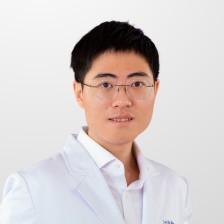
Hei Ming Lai
Institution
The Chinese University of Hong Kong
Country
Hong Kong
Field
Biomedical Sciences
Lai won the 2024 Croucher Tak Wah Mak Innovation Award for leading research in creating a 3D spatial multi-omics platform for clinical diagnostics and spatial biology research.
(Photo: The Chinese University of Hong Kong)
AWARDS
- 2024 Croucher Tak Wah Mak Innovation Award
Related articles

Designing A Better Fire Extinguisher For Space
Rather than spray carbon dioxide to put out fires, a fire extinguisher developed by scientists in Japan relies on a powerful vacuum.

A One-Step Process To Make ‘Green’ Plastics
An international team of scientists has developed a straightforward method to produce bio-based plastics.

Nearly Half Of Indian Teens Don’t Fare Well In School Due To Hunger
Food insecurity is linked to lower test scores in adolescents, according to an international team of researchers.

Fungus Becomes Factory For African Sleeping Sickness Drug
By genetically modifying a fungus, researchers in Japan can produce large quantities of ascofuranone, a promising antibiotic for the treatment of African sleeping sickness.

Entangled Photons Strengthen Data Encryption
By keeping entangled photons in sync as they travel different paths through an optical fiber network, researchers in Singapore have demonstrated successful quantum key distribution over a distance of ten kilometers.

Monkeys With Human Gene Show Improved Cognitive Performance
Researchers in China have improved the working memory and reaction time of transgenic monkeys bearing a human gene that regulates brain development.

Winners Of Asian Scientist Lab Tech of the Year 2019 Award Announced
Ten laboratory technicians received cash and prizes worth over S$10,000 at the inaugural Asian Scientist Lab Tech of the Year 2019 award ceremony held in Singapore.

Weaving Electronic Fibers Into Fabric
Researchers in China have developed a 3D printer equipped with a coaxial nozzle that threads energy-harvesting fibers onto fabrics.

Levels Of Autism In China Similar To The West
A joint China-UK study has found that around one in a hundred Chinese has an autism spectrum condition, and that this prevalence is similar to that in Western countries.