


The Asian Scientist 100
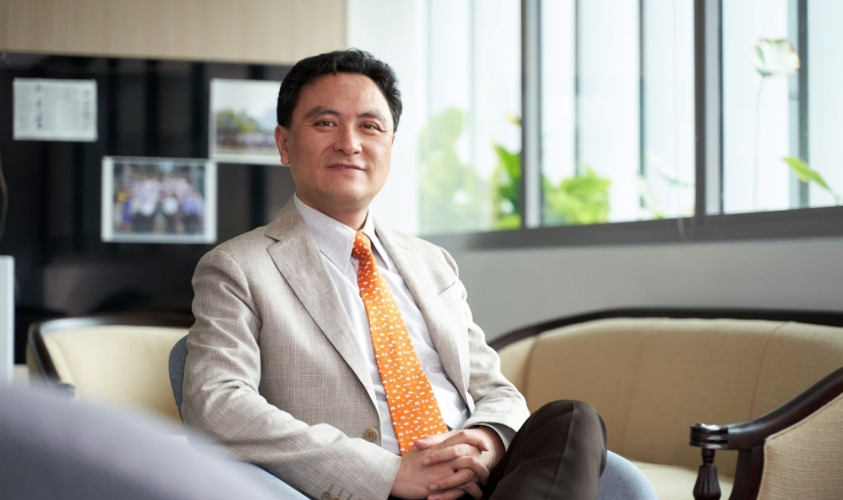
Hei Ming Lai

Institution
The Chinese University of Hong Kong
Country
Hong Kong
Field
Biomedical Sciences
Lai won the 2024 Croucher Tak Wah Mak Innovation Award for leading research in creating a 3D spatial multi-omics platform for clinical diagnostics and spatial biology research.
(Photo: The Chinese University of Hong Kong)
AWARDS
- 2024 Croucher Tak Wah Mak Innovation Award
Related articles

A Viral Factory
In the past decade of intensive farming industrialization, a deluge of viral diseases has threatened public health, writes Zaria Gorvett.

Techventure 2013: How Digital Health Can Change Our Lives
Vaibhav Bhandari, Director of Product Management at Optum, says that digital health is disrupting traditional healthcare and empowering patients.

The Magic Of Science: Where Did It Go?
How do we win back disillusioned scientists who have transitioned from the starry eyed to the practical? Dr. Laasya Samhita of the Indian Institute of Science, Bangalore writes.

Translational Inefficiencies In R&D: The Blind Men And The Elephant
Prof. Lawrence Ho of NUHS narrates the classic tale of the blind men and the elephant to explain the translational inefficiencies observed in Singapore’s biomedical research.

Taking Image Guided Therapy To Greater Heights
The Philips Azurion 7 C20 with FlexArm augments image guided therapy workflows and grants medical teams unprecedented flexibility in hybrid operating rooms.

Bringing Businesses Back From The Brink
A panel of experts at the SMU-Cambridge roundtable on corporate insolvency law discussed how Singapore’s ‘Omnibus Bill’ could position Singapore as a hub for corporate debt restructuring.
Perspectives On Performance And Accountability
SMU Assistant Professor Zhang Wei seeks to uncover and explain the real-world impacts of legal systems and corporate governance frameworks.

Singapore: A Sentinel For Southeast Asian Seafood Safety (VIDEO)
What we learnt from the unprecedented 2015 GBS outbreak and its implications for food safety in Southeast Asia.

Philippine Senate Adopts Resolution Honoring Filipinos On Asian Scientist 100 List
The Senate of the Philippines has adopted a resolution that commends eight Filipino scientists who were part of the Asian Scientist 100 list (2018 edition).