


The Asian Scientist 100
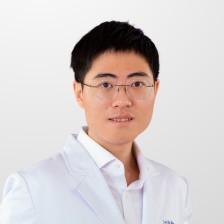
Hei Ming Lai
Institution
The Chinese University of Hong Kong
Country
Hong Kong
Field
Biomedical Sciences
Lai won the 2024 Croucher Tak Wah Mak Innovation Award for leading research in creating a 3D spatial multi-omics platform for clinical diagnostics and spatial biology research.
(Photo: The Chinese University of Hong Kong)
AWARDS
- 2024 Croucher Tak Wah Mak Innovation Award
Related articles
Exploring The Oceans With Robotic Turtles & Pufferfishes
Researchers from NUS have designed biomimetic robots capable of performing complicated tasks such as surveillance and energy harvesting.

Singapore Creates World’s Largest Asian Genetic Databank
The genomes of some 5,000 Singaporeans representing 80 percent of Asia's ethnic diversity have been sequenced by researchers in Singapore.

Newly Appointed MIT Media Lab Director, Joichi Ito, Talks To Asian Scientist
In a wide-ranging interview, media savant Joichi Ito talks to Asian Scientist Magazine about his vision as Executive Director of the MIT Media Lab, his thoughts on education, and his lifelong bond with Japan and Asia.

The History Of Penguins Laid Bare In Their Genomes
An international team of scientists has released data on 19 penguin genomes which can be used to understand how the birds evolved over time.

Asia’s Rising Scientists: Anjan Soumyanarayanan
Bringing together expertise in quantitative microscopy, electrical measurements and materials science, Dr. Anjan Soumyanarayanan is putting his own spin on nanoelectronics.

Choir Singing Synchronizes Heart Beats
A new study on how music affects our body and our health has found that when people sing in a choir, their heart beats become synchronized.

Vega’s Lift-Off A Milestone For Arianespace, ASEAN Director Says
Asian Scientist Magazine chats with Arianespace’s ASEAN Director about Vega's maiden launch, potential competition from U.S. start-up SpaceX, and the company's plans for the Asian market.
Concrete Doped With Microbes Gains Durability
Scientists in Japan have found that the rate of corrosion of steel bars in concrete can be slowed by embedding aerobic bacteria within cement.

It’s Morphing Time! How The Dengue Virus Evades Detection
Dengue virus becoming resistant to vaccines and therapeutics due to mutations in specific protein, study shows.