


The Asian Scientist 100
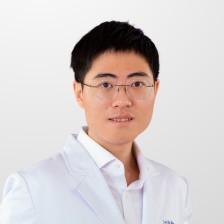
Hei Ming Lai
Institution
The Chinese University of Hong Kong
Country
Hong Kong
Field
Biomedical Sciences
Lai won the 2024 Croucher Tak Wah Mak Innovation Award for leading research in creating a 3D spatial multi-omics platform for clinical diagnostics and spatial biology research.
(Photo: The Chinese University of Hong Kong)
AWARDS
- 2024 Croucher Tak Wah Mak Innovation Award
Related articles
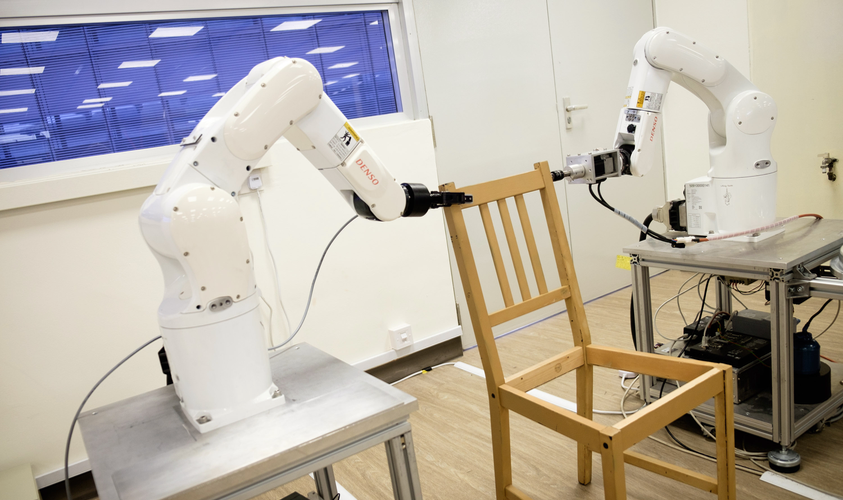
Watch A Robot Assemble Its Own IKEA Chair (VIDEO)
How long does it take you to assemble IKEA furniture? This robot can do it in under nine minutes without any external help.

Mendeley Co-Founder: We Made A Social Tool For Academics
Jan Reichelt, the co-founder and president of Mendeley, the popular research-management platform, talks to Asian Scientist about the story and success of the company, and shares his vision for the future.

Wan Yue First Singaporean To Win Branco Weiss Fellowship
Dr. Wan Yue has been awarded the Branco Weiss Fellowship for her work using RNA to tackle antimicrobial resistance.

Gravitating To Singapore
Seeking to study the effects of gravity on muscle mass in humans, Dr. Alfredo Franco-Obregón left the research group he founded at ETH to come to Singapore. He shares his experiences with Asian Scientist.

The Academy And Industry: Not Necessarily At Odds
While scientists may sometimes see basic and applied research as two opposing ends of the spectrum, combining the two has been beneficial, share A*STAR’s top leaders.

Epidural? It’s Up To You
A study of 15,752 first-time mothers shows that whether the epidural is taken early or late does not affect the need for a Caesarean section.

The Future Of Life Science With Agilent Technologies
The Young Scientist Forum organized by Agilent Technologies will take place at the University of Melbourne on March 28 and Biopolis Singapore on April 29.

Do Falling Stock Prices Drive People Crazy?
Falling stock prices lead to increased hospitalizations for mental disorders, according to a new study in Taiwan.

Non-Toxic Cancer Treatment On The Way?
Researchers have developed and tested a “Trojan horse” treatment for cancer in mice, raising hopes for non-toxic human cancer treatment.