


The Asian Scientist 100
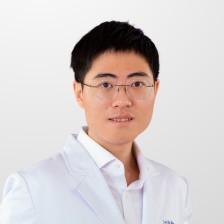
Hei Ming Lai
Institution
The Chinese University of Hong Kong
Country
Hong Kong
Field
Biomedical Sciences
Lai won the 2024 Croucher Tak Wah Mak Innovation Award for leading research in creating a 3D spatial multi-omics platform for clinical diagnostics and spatial biology research.
(Photo: The Chinese University of Hong Kong)
AWARDS
- 2024 Croucher Tak Wah Mak Innovation Award
Related articles

Fight-Or-Flight Reflex Circuit Uncovered In Mice
Using optogenetics and neural tracing methods, scientists mapped the fight-or-flight reflex circuit in the brains of mice.

Sea Cucumber Saccharide Could Make Safe Anticoagulant
Researchers have identified an oligosaccharide that can selectively inhibit the rate-limiting enzyme of the blood coagulation cascade.
The Blind Spot Can Sense Light After All
Although not involved in vision, light on the eye's blind spot can influence the pupillary light reflex.
Hydogels Help Hep C Drugs Go The Distance
Hydrogel delivery of PEGylated interferon could help reduce the frequency of treatment for hepatitis C patients to once every two months.

Squeezing Light Into A Point-Like Space
By focusing light into a 3D area a few nanometers wide, scientists have increased light intensity 400,000 times.

Hypervirulent TB Strain Evolved in Northern China 2,000 Years Ago
The dominant TB strain circulating in East Asia has had a long history and is unlikely to have been caused by recent vaccination and treatment efforts.

The Secrets of Traditional Asian Beauty
We take a look at ancient natural beauty remedies that Asian women have been using for centuries.
Professor Tommy Koh: The Future Of Water Today
National University of Singapore's Professor Tommy Koh highlights the importance of treasuring water and discusses solutions to conserve water.

The WHO Dealmakers: Sending Vaccine Technology To The Third World
Empowering countries to make their own vaccines may sound like a herculean task, but it is all in a day's work for the Technology Transfer Initiative team at the World Health Organization.