


The Asian Scientist 100
Di Li

Institution
National Astronomical Observatories of the Chinese Academy of Sciences
Country
China
Field
Aerospace & Astronomy
Li received the Marcel Grossmann Award for his pioneering contributions in the field of fast radio bursts. Li is the first scientist in China to receive this prize for research conducted within China.
(Photo: The Paper)
AWARDS
- Marcel Grossmann Award
Related articles

World Heart Federation Urges Global Tobacco Reduction
At the Tobacco End Game conference in New Delhi, The World Heart Federation called on countries worldwide to set a target year to end tobacco use in their populations.

Butterfly Wings Inspire New Nanotechnology
Researchers have developed a device that could make optical communication faster and more secure by mimicking structures in butterfly wings.

Arsenic Risk In China’s Groundwater Mapped
Researchers have developed a new statistical model to estimate the risk of arsenic contamination in China's groundwater.

Want A Happy Retirement? Manage Your Free Time Better
How well retirees plan their free time is more important than the amount of free time on hand, according to a study conducted in Taiwan.

Codeine May Increase Sensitivity To Pain
Large and frequent doses of the pain-killer codeine may actually produce heightened sensitivity to pain, according to a new study.

Snails, Mussels And Squids Guide Production of Novel Biomaterials
A wide range of biologically inspired materials may now be possible by combining protein studies, materials science and RNA sequencing.
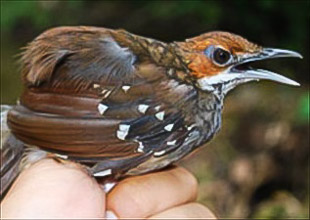
New ‘Ventriloquist’ Bird Species Discovered In Philippines
Researchers have discovered a new ground-dwelling forest bird species that lives on Luzon Island of the Philippine archipelago.

Sudoku Saves Photographers From Copyright Theft
A new watermarking technology based on Sudoku puzzles has been developed by computer scientists in Malaysia to thwart image thieves.

Massive Groundwater Pumping In Asia May Poison Millions, Study
Millions of people in Asia may be at risk of arsenic poisoning because of massive groundwater pumping, scientists warned in a new study.