


The Asian Scientist 100
Di Li

Institution
National Astronomical Observatories of the Chinese Academy of Sciences
Country
China
Field
Aerospace & Astronomy
Li received the Marcel Grossmann Award for his pioneering contributions in the field of fast radio bursts. Li is the first scientist in China to receive this prize for research conducted within China.
(Photo: The Paper)
AWARDS
- Marcel Grossmann Award
Related articles
Monkeys Act As Reservoir For Malaria In Southeast Asia
An emerging malarial strain primarily infecting monkeys in Southeast Asia has been discovered in a Wellcome Trust-funded study.

Humans Evolved Dexterous Hands Before Agile Feet
A long-standing mystery in human evolution has been solved: humans evolved dextrous hands before developing the ability to walk on two legs.

Macaque Monkey Steals Camera And Takes Photo Of Himself
A macaque monkey in Indonesia snatched a camera from a wildlife photographer before snapping himself in a variety of poses.

Elvis The Monkey & Psychedelic Gecko Among New Species Found In Mekong
A monkey that has Elvis' hairstyle, a self-cloning skink, five carnivorous plants, and a unique leaf warbler are among the 208 species newly described by science in the Greater Mekong region in 2010.

Monkeys Emerge As Malaria Reservoirs In Malaysia
A rare strain of malaria is beginning to take hold in Malaysia, driven by increasing contact between humans and monkeys.

Like Humans, Apes Also Cannot ‘Unsee’
By modifying eye-tracking technology, researchers have shown that apes can remember and anticipate sequences from movies.

Crittercam Inventor Greg Marshall Tags Macaque Monkeys In Singapore
Asian Scientist Magazine follows Crittercam inventor and National Geographic scientist Greg Marshall as he tags macaque monkeys at Singapore's Bukit Timah Nature Reserve.

Surprise Split In Population Of Monkey Malaria Parasite
Monkey malaria is on the rise in Malaysia, possibly driven by two divergent strains of the mosquito-borne parasite.
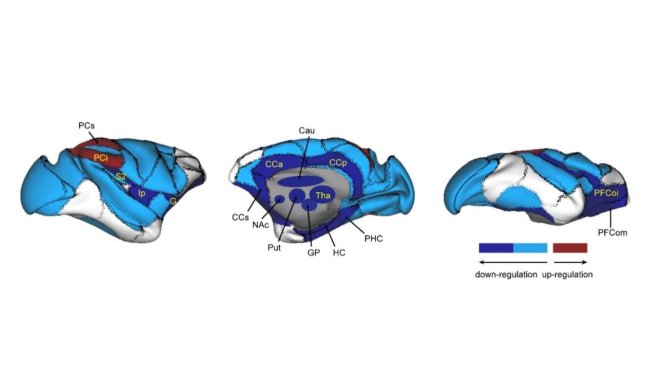
How Ketamine Re-Programs Monkey Brains
Ketamine re-wires the brains of monkeys in a way that could counteract structural changes associated with depression, study says.