


The Asian Scientist 100
Di Li

Institution
National Astronomical Observatories of the Chinese Academy of Sciences
Country
China
Field
Aerospace & Astronomy
Li received the Marcel Grossmann Award for his pioneering contributions in the field of fast radio bursts. Li is the first scientist in China to receive this prize for research conducted within China.
(Photo: The Paper)
AWARDS
- Marcel Grossmann Award
Related articles

KAIST Engineers Win IEEE William R. Bennett Prize, Again
A team of electrical engineers based in South Korea have won the Institute of Electrical and Electronics Engineers William R. Bennett Prize for a second time for their 2013 paper.

Chinese Desert Researcher Receives Humboldt Research Award
Dr. Yang Xiaoping was recognized for his research on environmental evolution and human activity in arid areas, among others.

Six Awarded South Korea’s 2016 Ho-Am Prize
The Prize, South Korea's version of the Nobel Prize, awarded six deserving individuals for their contributions to science, engineering, medicine, arts and community service.

The Chemistry Of Stellar Cocoons
Astronomers have discovered the first ‘hot molecular core,’ a cocoon of molecules that surrounds newborn stars, in a galaxy other than our own.
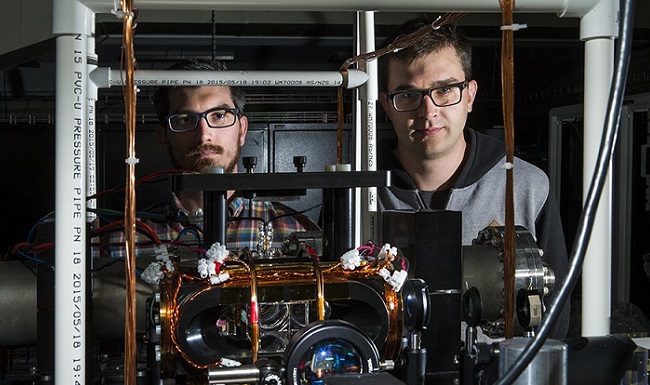
The Force Awakens? Physicists Succeed At ‘Stopping’ Light
Like when Kylo Ren used the Force to stop a laser blast mid-air, Australian physicists have successfully trapped light in an experiment.

Low-Protein, High-Carb Diet Boosts ‘Longevity’ Hormone
Paleo or pale-no? Contrary to popular belief, scientists have found that low-protein and high-carb diets help stimulate a hormone with life-extending and obesity-fighting benefits.
Fosun Pharma, Intuitive Surgical Establish Joint Venture in China
The two companies will research, develop, manufacture and sell robotic-assisted, catheter-based medical devices in China and beyond.

7 Must-Read Stories In September 2016
Whether it's self-driving cabs or university rankings, stories about Singapore were popular in September.

Nanofibers Make Sanitary Pads And Diapers Safer And Greener
Nanofibers that are more absorbent and better for the environment could one day replace the current material being used in sanitary pads and diapers.