


The Asian Scientist 100
Di Li

Institution
National Astronomical Observatories of the Chinese Academy of Sciences
Country
China
Field
Aerospace & Astronomy
Li received the Marcel Grossmann Award for his pioneering contributions in the field of fast radio bursts. Li is the first scientist in China to receive this prize for research conducted within China.
(Photo: The Paper)
AWARDS
- Marcel Grossmann Award
Related articles

7 Award-Winning Female Scientists
To mark the 2018 International Day of Women and Girls in Science, we've highlighted seven female scientists who have won international accolades for their research.

A Hair-Raising Discovery
Researchers in Japan have developed a method for large-scale preparation of hair-producing tissues.

Knocking Tumors Out Like A Light
Scientists have developed a wireless device that enhances the reach and effectiveness of anti-tumor photodynamic therapy.

Solving A 130-Year-Old Fluid Dynamics Conundrum
Researchers in Japan have demonstrated that transitional flow can be demystified using existing laws of resistance in fluid dynamics.

Discovering The Brain’s Secret ‘Gardener’
A team of researchers from the University of Tokyo have discovered a molecule involved in the ‘pruning’ of neuronal synapses, with implications for neurological disorders.

Taking The Pulse Of The Ocean
The University of Hong Kong has launched the MarineGEO-Hong Kong project, a part of the global initiative to quantify marine biodiversity.

Magnesium Makes Chromosomes Condense
Scientists in Japan have developed a new ion detector, MARIO, which shows how free magnesium ions affect chromosome formation.
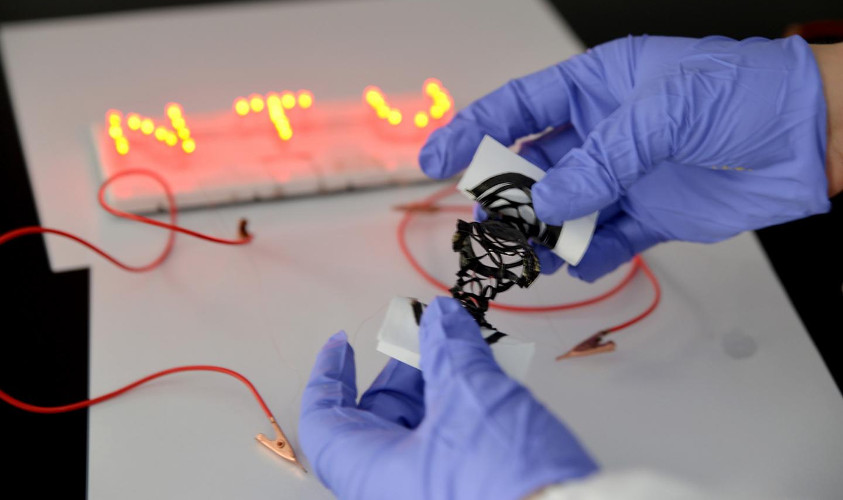
A Wearable Battery You Can Fold And Stretch
A team of scientists in Singapore has developed a customizable supercapacitor that can be used as a power source for wearable devices.

A Wearable That’s Barely There
This breathable electronic sensor was so comfortable that subjects would forget that they were wearing it.