


The Asian Scientist 100
Di Li

Institution
National Astronomical Observatories of the Chinese Academy of Sciences
Country
China
Field
Aerospace & Astronomy
Li received the Marcel Grossmann Award for his pioneering contributions in the field of fast radio bursts. Li is the first scientist in China to receive this prize for research conducted within China.
(Photo: The Paper)
AWARDS
- Marcel Grossmann Award
Related articles

Mass Vaccination Could Curb HFMD In China
China reported nine million cases of highly infectious HFMD between 2008 and 2013; broad vaccination could help bring these numbers down.

Freaky Fungi Friday
Much more than just mushrooms, fungi—and the people who study them—are simply fascinating.

Promising Dengue Vaccine Faces Final Test
The TV003 vaccine, which researchers believe will protect against all four strains of dengue, is set to complete a phase III trial by 2018.

Anti-Rabies Alliance To Vaccinate Dogs In At-Risk Areas
Mass dog vaccination is now seen as the most cost-effective means to control rabies, which kills roughly 70,000 people every year.

Transmission-Blocking Malaria Vaccine Gets Funding Boost
This malaria vaccine candidate is given to humans but targets mosquitoes, and clinical trials may commence in as little as four years.

Growing Calls For Academia Sinica’s President Wong Chi-Huey To Resign
Taiwan's Legislative Yuan has called for the resignation of Academia Sinica's President Wong Chi-Huey over his daughter's sale of shares in OBI Pharma, a Taiwanese biotech company.

Vaccine Less Effective Against Re-Emerging Japanese Encephalitis Strain
With the re-emergence of a previously rare strain of Japanese encephalitis that is not well covered by the current vaccine, we are on the cusp of a potential infectious disease crisis in Asia.
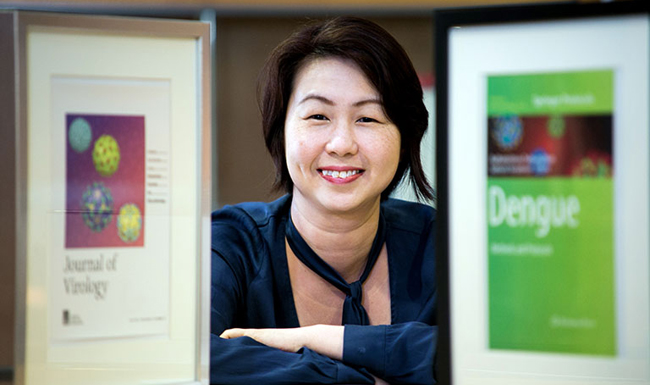
An Interview With A Zika Expert: Lok Shee-Mei
Lok, whose team imaged the structure of the Zika virus, explains why the virus is so resilient and how her research could help worldwide efforts to curb the outbreak.

How Do RNA Molecules Interact? With A SPLASH
This sequencing technology, named SPLASH, helps researchers understand the interactions between RNA molecules—and therefore, how to inhibit infectious organisms.