


The Asian Scientist 100
Di Li

Institution
National Astronomical Observatories of the Chinese Academy of Sciences
Country
China
Field
Aerospace & Astronomy
Li received the Marcel Grossmann Award for his pioneering contributions in the field of fast radio bursts. Li is the first scientist in China to receive this prize for research conducted within China.
(Photo: The Paper)
AWARDS
- Marcel Grossmann Award
Related articles

Tracking Down A Better Vision Test
Singapore-based startup BetaSight wants to turn eye-tracking VR headsets—originally designed for gaming—into medtech devices that can monitor eye and neurological health.

Meteorite Hints At Hidden Water On The Moon
The discovery of moganite in a lunar meteorite found in northwestern Africa suggests that water may be abundant on the Moon.
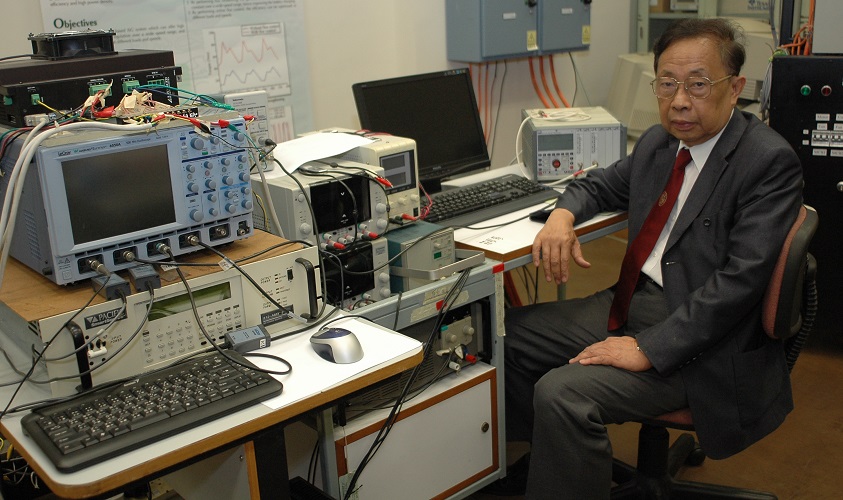
Asia’s Scientific Trailblazers: C. C. Chan
A pioneer in electric vehicle research, Professor C. C. Chan shares how a conducive ecosystem can be created for the future of mobility.

Asia’s Scientific Trailblazers: Jenny Su
For Professor Jenny Su, president of Taiwan’s National Cheng Kung University, universities have a social responsibility to respond to national and global crises.

Asia’s Rising Scientists: Yan Ning
Rather than let the shells of crabs and lobsters go to waste, Assistant Professor Yan Ning pioneered the field of ‘shell biorefinery’ to upcycle crustacean shells.

For MERS, Two Drugs Are Better Than One
Scientists have identified two drugs that, when combined, prevented the replication of Middle East respiratory syndrome coronavirus in human lung tissue.

How Patients With Alzheimer’s Disease Hide Their Forgetfulness
A research group at Kumamoto University, Japan, has found that patients suffering from Alzheimer’s disease often engage in face-saving behaviour to hide their loss of memory.

Cellulose You Can 3D Print
Researchers in Singapore have used cellulose derived from fungi-like organisms for large-scale sustainable 3D printing.

Detecting The Molecule That Causes Bad Breath
By integrating lead (II) acetate with a three-dimensional nanofiber web, South Korean researchers have developed a rapid and sensitive detector of bad breath.