


The Asian Scientist 100
Di Li

Institution
National Astronomical Observatories of the Chinese Academy of Sciences
Country
China
Field
Aerospace & Astronomy
Li received the Marcel Grossmann Award for his pioneering contributions in the field of fast radio bursts. Li is the first scientist in China to receive this prize for research conducted within China.
(Photo: The Paper)
AWARDS
- Marcel Grossmann Award
Related articles

Sailing Towards Greener Seas
Nanyang Technological University has launched a marine research laboratory to develop technologies for Singapore's maritime and offshore industry.
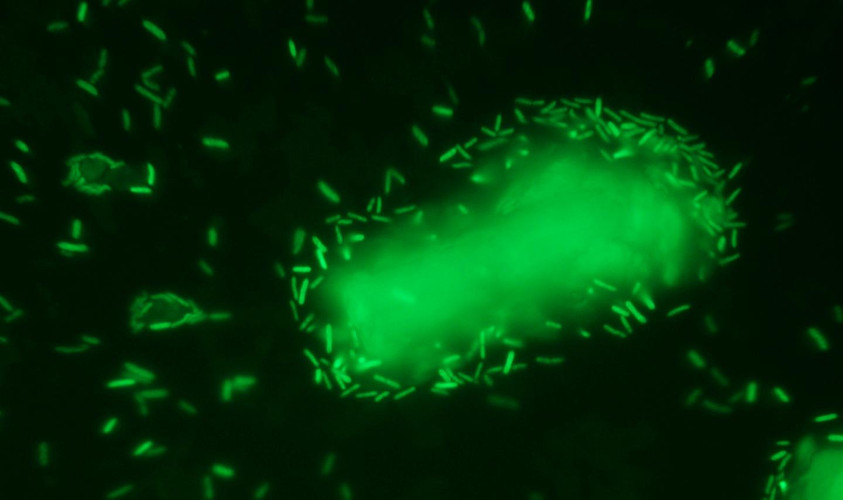
Generating Biofuel From Wheat Straw And Saw Dust
Using a natural bacterium isolated from mushroom crop residue, scientists have developed a way to directly convert plant-based material to butanol.

A Real-Time Inflammation Sensor That Fits In A Catheter
A team of researchers in Hong Kong has developed an ultra-thin and flexible sensor that makes inflammation testing 30 times faster.

Swapping Crops To Ensure Food Security In India
Replacing rice and wheat with crops such as maize, finger millet, pearl millet or sorghum could help India save water and provide its people with more nutritious food.

CNIC And China UniCom To Build 5G Technology Joint Lab
The joint laboratory will perform research on edge computing, network slicing, the Internet of Things and industrial Internet, among other 5G-related technologies.

A Concrete Solution To Construction Woes
The AM.NUS Construction 3D Printing Program will focus on fostering the adoption of 3D printing in the construction industry.

Nano Sun Launches Water Treatment Membrane Facility
Nano Sun, a Singapore-based startup, has established a facility to manufacture water treatment membranes using 3D printing technology.

Brand New & Cooler Than Ever
PHC Corporation, formerly known as Panasonic Healthcare Co., Ltd., is rolling out its eco-friendly, ergonomic and smart TwinGuard series of freezers under its life sciences brand, PHCbi.

Inside Indonesia’s ‘Double Burden’ Of Diseases
Communicable diseases such as diarrhoea and tuberculosis are on the decline in Indonesia, but new threats like diabetes are emerging.