


The Asian Scientist 100
Di Li

Institution
National Astronomical Observatories of the Chinese Academy of Sciences
Country
China
Field
Aerospace & Astronomy
Li received the Marcel Grossmann Award for his pioneering contributions in the field of fast radio bursts. Li is the first scientist in China to receive this prize for research conducted within China.
(Photo: The Paper)
AWARDS
- Marcel Grossmann Award
Related articles

Indonesia Opens First Shark And Manta Ray Sanctuary
The 46,000 square kilometer sanctuary is the first to be established in the Coral Triangle, and also provides protection to dugongs, whales, turtles, and dolphins.

Gut Microbes Could Influence Survival In Melamine Scandal
Scientists have discovered a clue as to why some children survived the melamine-contaminated milk scandal in China.
Is Cloud Seeding Preventing Further Flooding In Indonesia?
Indonesia is banking on an unusual strategy to prevent further flooding in its inundated capital Jakarta called cloud seeding.

Love Of Music & Harmony Can Be Learnt, Study
Our love of music and appreciation of musical harmony is learnt and not based on natural ability, says a new study.

Cold Air And Wasabi Linked To Longer Lifespan In Worms, Study
Cool temperatures and the spicy condiment wasabi activate a protein that increases the lifespans of nematode worms, according to a new study.

Pfizer To Conduct NSCLC Drug Trial In Asia
Pfizer Inc. will conduct a clinical trial of its crizotinib drug, marketed under the trademark Xalkori®, in four Asian countries.
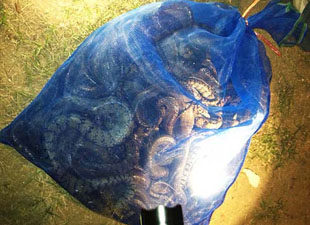
2,000 Smuggled Snakes Discovered On Chinese New Year’s Eve
More than 2,000 rat snakes and cobras were discovered in Thailand on the eve of the Year of the Snake.

Solar ‘Sponge’ To Soak Up Carbon Dioxide Emissions
Coal power station emissions could be reduced by a new, energy-efficient material that adsorbs carbon dioxide then releases it when exposed to sunlight.

Building Back Worse After Philippines Typhoon
More than two months after Typhoon Bopha hit the southern Philippines, some 198,000 families are still trying to repair their homes.