


The Asian Scientist 100
Can Li

Institution
University of Hong Kong
Country
Hong Kong
Field
Engineering
Li is a recipient of the 2023 Croucher Tak Wah Mak Innovation Award for his research exploring the limitations of digital computers in performing tasks accomplished by the human brain, including recognising faces, reasoning based on vague information, and learning from experience.
(Photo: University of Hong Kong)
AWARDS
- 2023 Croucher Tak Wah Mak Innovation Award
Related articles
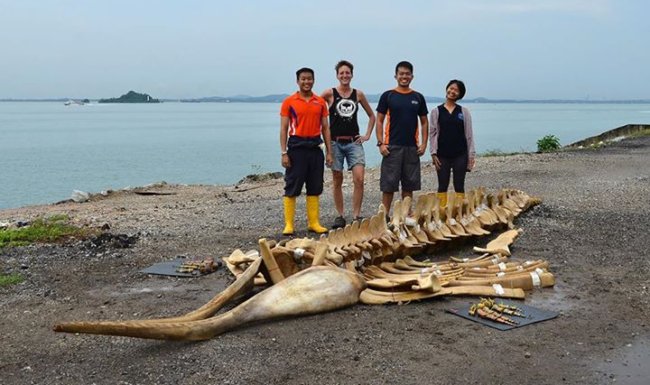
How To Dissect A Whale
Ever wondered what it takes to dissect an entire whale? Find out more from Lee Kong Chian Natural History Museum curator Marcus Chua!

Oncogene Identified As Inhibitor Of Cell Reprogramming
Inhibiting the well-known oncogene c-Jun could make it easier to turn somatic cells into induced pluripotent stem cells, study says.

Breaching The Blood Brain Barrier To Treat Autoimmune Diseases
Efficient delivery of a protein that regulates lymphocyte activation could be one way to treat central nervous system (CNS) diseases such as multiple sclerosis.

Oxygen Not Necessarily A Marker Of Extrasolar Life
Research shows that oxygen could come from other inorganic sources, changing the idea that oxygen is a marker of life on exoplanets.

Gloss Or Not? How Monkeys Tell The Difference
How glossy a surface is can be defined by three parameters that are recognized in specific parts of the temporal context, scientists say.

Whole-Virus Ebola Vaccine Protective In Monkeys
A whole-virus Ebola vaccine has been proven safe and effective in non-human primates.
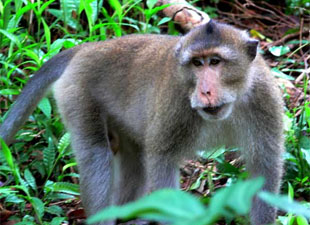
Monkeys Act As Reservoir For Malaria In Southeast Asia
An emerging malarial strain primarily infecting monkeys in Southeast Asia has been discovered in a Wellcome Trust-funded study.

Humans Evolved Dexterous Hands Before Agile Feet
A long-standing mystery in human evolution has been solved: humans evolved dextrous hands before developing the ability to walk on two legs.

Elvis The Monkey & Psychedelic Gecko Among New Species Found In Mekong
A monkey that has Elvis' hairstyle, a self-cloning skink, five carnivorous plants, and a unique leaf warbler are among the 208 species newly described by science in the Greater Mekong region in 2010.