


The Asian Scientist 100
Can Li

Institution
University of Hong Kong
Country
Hong Kong
Field
Engineering
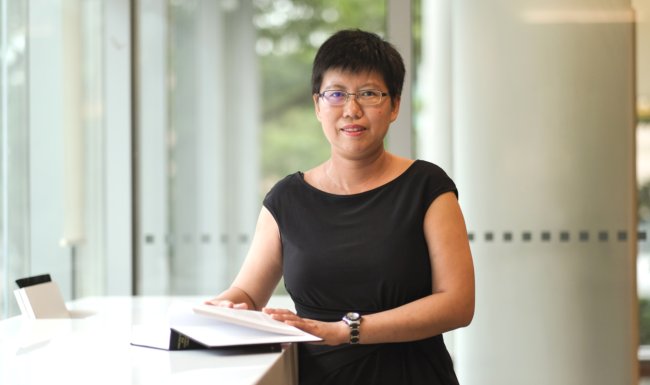
Li is a recipient of the 2023 Croucher Tak Wah Mak Innovation Award for his research exploring the limitations of digital computers in performing tasks accomplished by the human brain, including recognising faces, reasoning based on vague information, and learning from experience.
(Photo: University of Hong Kong)
AWARDS
- 2023 Croucher Tak Wah Mak Innovation Award
Related articles

Capturing Vesicles In The Act Of Fusion
Thanks to a pumpkin-shaped molecule, scientists can now observe the process of vesicle fusion in real time.

Ultrashort Laser Bursts To Bridge The Terahertz Gap
By creating grooves and ripples on the surface of terahertz emitting devices, scientists were able to enhance terahertz emission significantly, overcoming the ‘terahertz gap.’

Business Law Beyond Borders
The SMU Centre for Cross-Border Commercial Law in Asia (CEBCLA) is facilitating Singapore’s development as a major commercial law centre by conducting rigorous research on the practice of commercial law in Asia’s increasingly complex business environment.

Data Discovery-Driven Business Intelligence
At a recent talk organised by SMU Li Ka Shing Library, Gartner’s Bhavish Sood discussed innovations in the field of business intelligence.

The Race Against Time
SMU Professor Tse Yiu Kuen is developing econometric models that can provide us with a clearer picture of global markets.
Mergers & Acquisitions: The Asian Way
Associate Professor Wan Wai Yee studies the laws that govern mergers and acquisitions in Asia’s fast-changing landscape.

Giving Economic Data A Voice
SMU Professor Su Liangjun is developing new techniques in econometrics to provide a more realistic understanding of the economy.

An Invisible Wildlife Trade Uncovered
The illegal trade of flora of Southeast Asia is larger than previously thought, spurring the call for more attention to be paid to this important form of biodiversity.
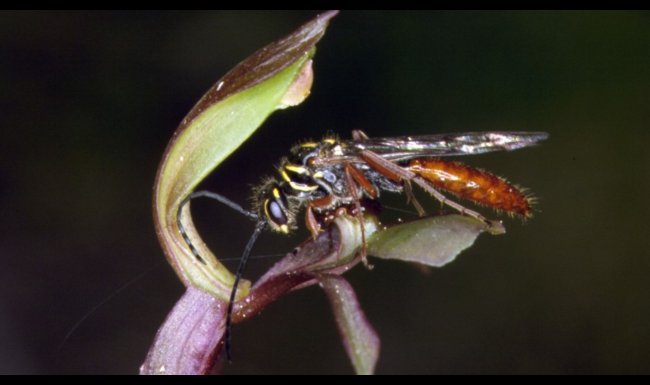
Size Matters For Sexually Deceptive Orchids
Besides chemical signals, shape and size matter when it comes to attracting male wasps to pollinate orchids, scientists say.