


The Asian Scientist 100
Can Li

Institution
University of Hong Kong
Country
Hong Kong
Field
Engineering
Li is a recipient of the 2023 Croucher Tak Wah Mak Innovation Award for his research exploring the limitations of digital computers in performing tasks accomplished by the human brain, including recognising faces, reasoning based on vague information, and learning from experience.
(Photo: University of Hong Kong)
AWARDS
- 2023 Croucher Tak Wah Mak Innovation Award
Related articles

Winners Of The Inaugural Asian Scientist #ScienceHaiku Competition Announced
Check out the fantastic entries by the winners and runners-up of our inaugural science haiku competition here.

‘Water Pill’ Prevents Lung Cancer Drug Resistance
A cheap diuretic could extend the effectiveness of existing lung cancer drugs, research suggests.

3D Printing Gives Evolutionary Theory More Bite
Micro-CT scanning and 3D printing allow scientists to digitally dissect fossils, providing some of the earliest known evidence of tooth-like structures in primitive jawed fishes.

Subject: Zika, OMG
If you were emailing your friends about the Zika outbreak as it unfolded, it might looked something like this.

Rare Butterflies Are Poor Urbanites
Ecologists have unlocked the secret lives of butterflies fluttering around Hong Kong's parks, providing insight into how rare species are affected by urbanization.
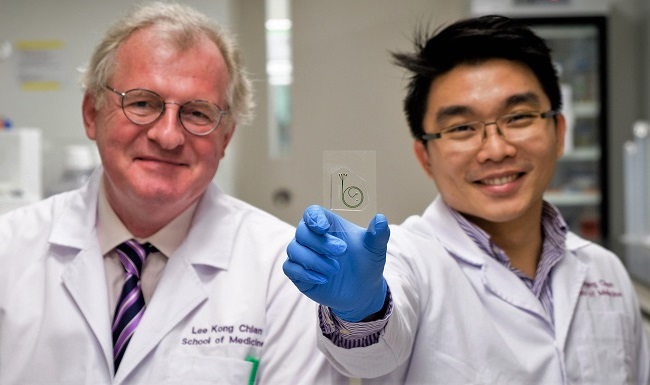
This Chip Can Detect Inflammation In Diabetics
Researchers in Singapore have developed a quick test to detect inflammation in diabetic patients.

UK, South Korea Partner On Developing 5G Technology
The South Korean government is collaborating with a research center in the UK on delivering 5G mobile communications and wireless connectivity technology.

Scientists Find Region In Mouse Brain That Works Like GPS
Scientists in Japan have discovered a region of the mouse brain that acts like a GPS navigator in the absence of a sound cue signaling the location of a reward.

Medicinal Plant Compound Shrinks Prostate Tumors In Mice
A compound derived from the neem plant, which is typically used in Indian Ayurvedic medicine, has been shown to reduce prostate cancer tumor size by 70 percent in mice.