


Asian Scientist Newsroom

ABOUT
Asian Scientist Magazine is an award-winning science and technology magazine that highlights R&D news stories from Asia to a global audience. The magazine is published by Singapore-headquartered Wildtype Media Group.
Stories by Asian Scientist Newsroom

Insecticide-Resistant Bed Bugs Have Thick Skins
Thicker skins could explain why bed bugs have begun to take over homes all around the world in the last two decades.
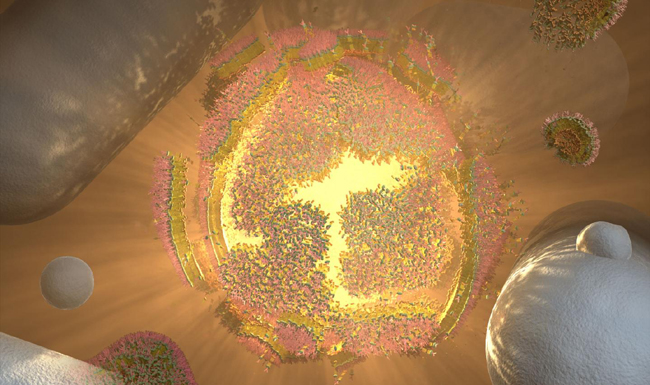
Bacteria Attack With ‘Suicide Bombers’ (VIDEO)
Bacterial cells can quickly change from rod- to round-shaped and then explode, releasing cellular content into the surrounding environment to wreak more havoc.

A Rock Solid Understanding Of Carbon Capture & Storage
This more accurate and detailed simulation of carbon as it is injected into underground rocks could help to improve carbon capture and storage methods.

Researchers Identify Gene That Kickstarts Scoliosis
An overactive gene, called ladybird homeobox 1, was found to be the start of a genetic chain reaction that causes the spine to grow abnormally.

Researchers Create Larger Than Life Synapse
Giant synapses make it easier for scientists to observe events happening within and it last longer than fresh brain slices.

Trapping Drugs In Malaria Parasite ‘Stomachs’
By trapping chloroquine in the digestive vacuole of the malaria parasite, this hybrid drug effectively kills drug-resistant strains.

Drug Resistant Malaria Parasites Not Spread By Mosquitoes
Although resistance to the drug atovaquone helps malaria parasites survive in mammalian hosts, the mutation kills them during the mosquito phase of their life cycle.

Combination HepC Treatment Tested In Malaysia, Thailand
The Drugs for Neglected Diseases initiative has launched a clinical trial of a hepatitis C combination drug treatment which costs less than US$300.

Newly Discovered Species Re-Writes Worm Family Tree
A hermaphroditic roundworm discovered in India that primarily feeds on bacteria has been identified as the connecting link between two taxonomic classes of nematodes.