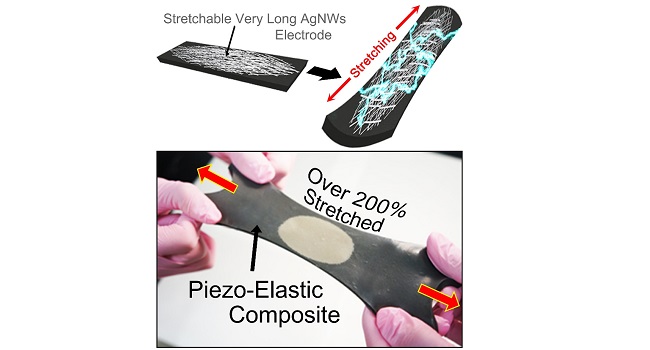
AsianScientist (May 27, 2014) – Soon, we may be able to power a light bulb just by bending our fingers. Scientists from South Korea and the US have developed a nanogenerator that is highly efficient and flexible, which may lead to applications in energy harvesting technologies for electronics.
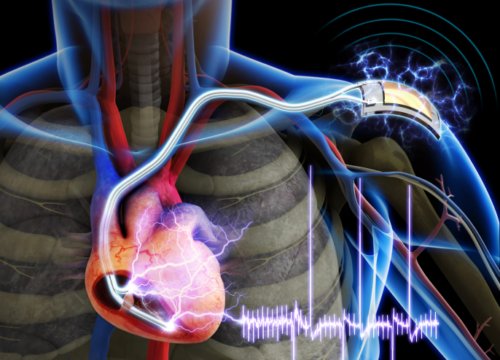
Nanogenerators are self-powered energy harvesters that convert kinetic energy created from vibrations or mechanical sources into electrical power. Removing the need of external circuits or batteries, these harvesters could provide sustainable energy generation in isolated or inaccessible environments or even in the human body.
Presently, poor energy efficiency and complex fabrication processes impede the commercialization of nanogenerators. In the present study, researchers have addressed these problems by developing a technique called laser lift-off (LLO) to transfer a type of nanogenerator – the piezoelectric PZT thin film – from bulk sapphire substrates to plastic substrates.
Via LLO, a large-area PZT thin film nanogenerator was produced on flexible substrates measuring 2cm by 2cm. According to corresponding author Lee Keon Jae, associate professor at the Korea Advanced Institute of Science and Technology, slight mechanical deformation of a single thin plastic substrate led to a 250V electrical output.
“Such output power is just enough to turn on 100 LED lights,” Professor Lee explained.
According to the research, which was published in Advanced Materials, the piezoelectric nanogenerator also achieved a power conversion efficiency 40 times higher than previously reported results.
“Building on this concept, it is highly expected that tiny mechanical motions, including human body movements of muscle contraction and relaxation, can be readily converted into electrical energy and, furthermore, acted as eternal power sources,” said Professor Lee.
The article can be found at: Park et al. (2014) Highly-Efficient, Flexible Piezoelectric PZT Thin Film Nanogenerator on Plastic Substrates.
_____
Source: KAIST; Photo: Kenny Louie/CC/Flickr.
Disclaimer: This article does not necessarily reflect the views of AsianScientist or its staff.