


chinese academy of sciences
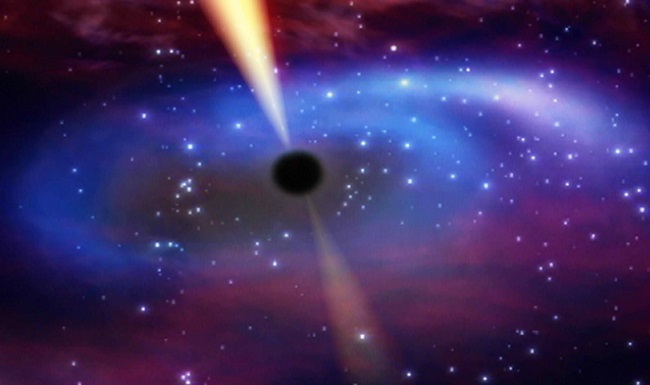
This Is What Happens When A Supermassive Black Hole Destroys A Star
A radio telescope network the size of the Earth has revealed what happens when a supermassive black hole destroys a star.

World’s Largest Single-Aperture Radio Telescope Opens Its Eye
The Five-hundred-meter Aperture Spherical Telescope in Guizhou, China will start operating in two to three months' time.

Plastic Waste Problem? Turn It Into Fuel
To combat ever-worrying plastic pollution, scientists in China and the US have developed a degradation method to convert plastics into useful fuels and chemical feedstocks.

China’s Homegrown 100 Pflops Supercomputer Leads Top500 List
China’s Sunway TaihuLight supercomputer, which can achieve a peak performance of up to 125 petaflops, is officially the world's fastest.

Chinese Particle Physicist Wins Young Scientist Award For Neutrino Discovery
Particle physicist Wen Liangjun has won IUPAP's 2016 Young Scientist Award for his role in the discovery of the non-zero neutrino mixing angle θ13.

Chinese Atmospheric Scientist Wins Meteorological Prize
Professor Zeng Qingcun was recognized for his contributions to satellite meteorological remote-sensing theory and numerical weather prediction theory, among others.
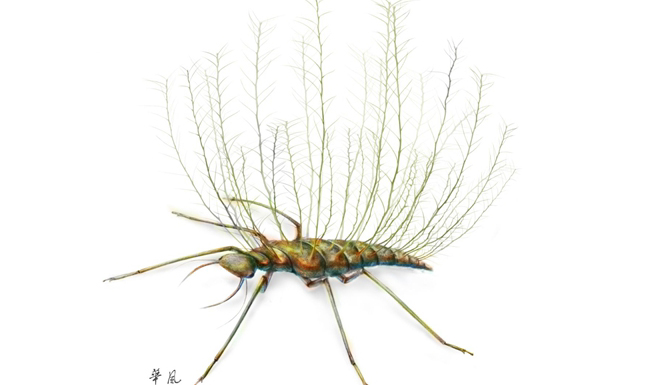
Insect Camouflage Behavior Dates Back To The Cretaceous
Fossils of green lacewings and other insects dating back to the mid-Cretaceous show how they evolved to carry debris as camouflage.

Chinese Neuroscientist Wins Gruber Neuroscience Prize
Poo Mu-Ming, director of the Institute of Neuroscience in Shanghai, is being honored for his seminal discoveries in brain plasticity.

What Sustains The Earth’s Magnetic Field?
Researchers have shed light on how heat is conducted by the inner and outer cores of the Earth to create its protective magnetic field.


