


The Asian Scientist 100
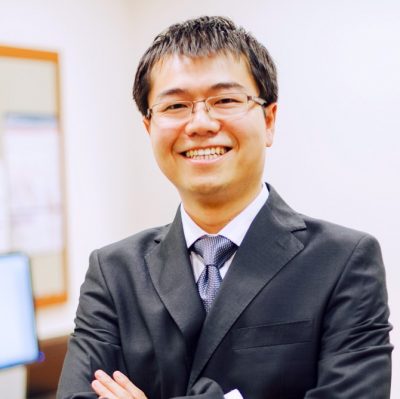
Yan Ning
Institution
National University of Singapore
Country
Singapore
Field
Environmental Sciences & Geology
For his research on harvesting materials from waste through rational catalytic design, Yan was awarded the 2017 Environment, Sustainability and Energy Division Early Career Award.
(Photo: National University of Singapore)
AWARDS
- 2017 Environment, Sustainability and Energy Division Early Career Award
Related articles

UN: High Rates Of Maternal Deaths In Myanmar Among Migrants, Refugees
Lack of access to reproductive healthcare in Myanmar has led to high rates of maternal deaths and unplanned pregnancies among the country's displaced and refugee populations, say health experts.

Myanmar In Dire Need Of HIV Treatments, Experts Say
Lack of access to anti-retroviral therapy to treat HIV has left thousands of patients in Myanmar with deteriorating immunity and increased vulnerability to tuberculosis, say health workers.

Artemisinin-Resistant Malarial Strains Emerge On Thai-Myanmar border
Two studies published in The Lancet and Science last week show a worrying increase in resistance of the malaria parasite at the Thai-Myanmar border.

Science Competes For Attention In Myanmar’s Reforms
Science and education were poorly served by Myanmar's military junta and are still struggling for attention under recent reforms, writes Mike Ives.
WHO Warns Of Rising Anti-Malarial Drug Resistance In Asia
Growing resistance to artemisinin is threatening to roll back gains made in combating the disease, said malaria experts at a health conference in Sydney, Australia last week.

WWF Report Highlights Diversity Loss In Mekong Region
The Greater Mekong risks losing more than a third of its remaining forest cover within the next two decades, warns a new WWF report.

Japan’s Universities Top Asia-Pac in 2014 ARWU Rankings
The University of Tokyo and Kyoto University retain their position as top in Asia-Pacific, ranked 21st and 26th respectively.
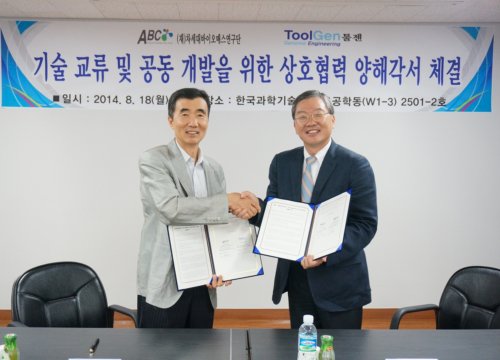
ToolGen & KAIST To Collaborate On Biofuel Gene Editing
KAIST partners gene editing company ToolGen to develop methods of increasing biofuel yield from microalgae.

ADB Ranks Japan & Korea As Asia’s Most Innovative
Japan and Korea have come out tops in the new Creativity Productivity Index, which focuses on how countries turn creative inputs into innovative outputs.