


The Asian Scientist 100
Yan Ning
Institution
National University of Singapore
Country
Singapore
Field
Environmental Sciences & Geology
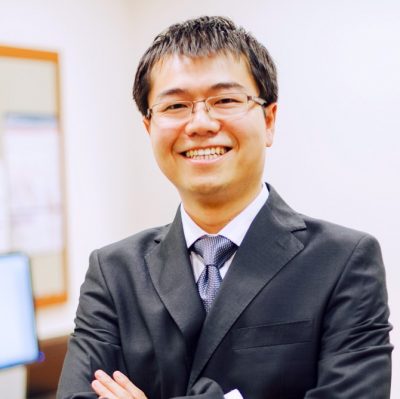
For his research on harvesting materials from waste through rational catalytic design, Yan was awarded the 2017 Environment, Sustainability and Energy Division Early Career Award.
(Photo: National University of Singapore)
AWARDS
- 2017 Environment, Sustainability and Energy Division Early Career Award
Related articles
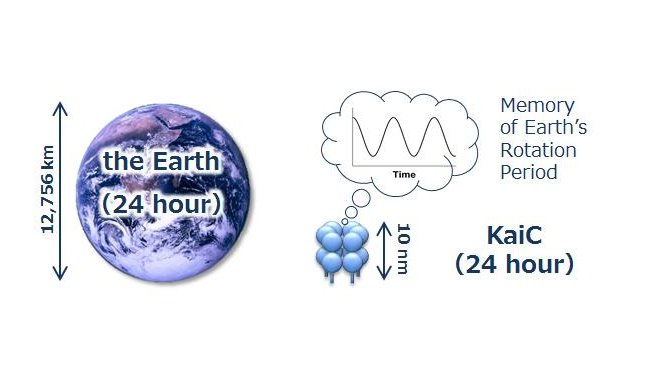
The Tiny Protein That Syncs With The Earth’s Rotation
Oscillations of a 10 nm protein help cells keep in tune with the 24 hour cycles of the Earth.

Small Hydropower ‘Safer’ Than Big Dams In The Himalayas
Particularly in quake-prone areas like the Himalayas, smaller dams could be cheaper and safer.

Taking Nano Big: A Conversation With Subbu Venkatraman
We speak to Professor Subbu Venkatraman, founding director of the NTU-Northwestern Nanomedicine Institute, on how he is leading an international effort to ramp up nanomedical research in Singapore.

A Charged Partnership: Unlikely Partners In The Antibiotics Arms Race
Antibiotic resistance is a growing threat to global health. By combining their expertise, a cancer drug delivery researcher and a technology giant might just have come up with a solution to prevent the slide into a post-antibiotic era.

Building A Better Battery: Storage Solutions For Asia’s Energy Goals
Asia has set ambitious renewable energy targets for itself but is still missing one crucial piece of the puzzle—ways to store power from intermittent renewable sources. Could homegrown technologies fill the gap?

Towards Gender Parity In Asian Science & Tech
Gender imbalances in science and technology participation throughout Asia are a missed opportunity to capture the potential of the best scientists, says Ms. Danièle A. Castle.

Test Scores And Dumplings
Yes, kids from dumpling-eating countries seem to do extraordinarily well on math and science tests, but at what cost?

Capillary Force Helps Nanostructures Self-Assemble
By combining laser printing and capillary action, researchers have developed a highly tunable method to synthesize nanostructures.

How Science Diplomacy Is Bridging The Two Koreas
Through joint initiatives such as the Pyongyang University of Science and Technology, science could help foster bilateral cooperation between North and South Korea.