


The Asian Scientist 100
Yan Ning
Institution
National University of Singapore
Country
Singapore
Field
Environmental Sciences & Geology
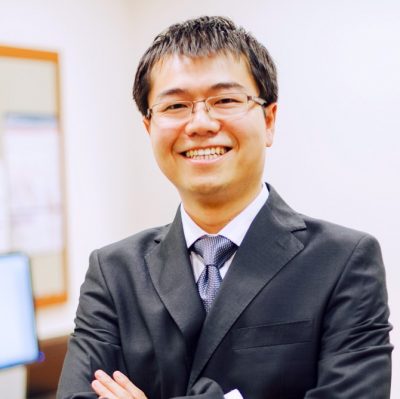
For his research on harvesting materials from waste through rational catalytic design, Yan was awarded the 2017 Environment, Sustainability and Energy Division Early Career Award.
(Photo: National University of Singapore)
AWARDS
- 2017 Environment, Sustainability and Energy Division Early Career Award
Related articles

Sense And Sustainability
Cheap, easy-to-install sensors, improved wireless networking technologies and powerful big data analytics are helping businesses cut costs and go green at the same time.

SGInnovate To Launch Singapore Into AI & Robotics Space
SGInnovate will focus on areas such as artificial intelligence, robotics, digital health, financial services, smart energy, digital manufacturing and transportation.

China’s Coral Crisis
Coral abundance around mainland China and Hainan Island has declined by at least 80 percent over the past 30 years. Can anything be done to stop this trend?

When Crushed, Light-Emitting Compounds Reveal Their True Colors
Scientists have developed a series of luminescent compounds that change the color of emission upon mechanical stimulation.

Test Tube Sperm Produce Apparently Healthy Offspring
Researchers have successfully coaxed stem cells into sperm-like cells that can produce healthy offspring.

Meet The Winner Of The 2017 Breakthrough Junior Challenge (VIDEO)
Twelfth-grader Hillary Diane Andales talks about what inspired her to make her prize-winning video on the theory of relativity and the equivalence of reference frames.

Sniffing Out Death With A Bioelectronic ‘Nose’
Scientists in Korea have created a selective and sensitive detector for decaying substances by packaging a zebrafish receptor into nanodiscs.

Kazutoshi Mori Wins 2018 Breakthrough Prize
Kazutoshi Mori was recognized for his discovery of the unfolded protein response, a cellular quality-control system that detects disease-causing unfolded proteins and directs cells to take corrective measures.

AI Assists In Water Resource Management
Scientists have tested two models of artificial intelligence for forecasting groundwater reserves, showing that the support vector regression method has good predictive power.