


The Asian Scientist 100
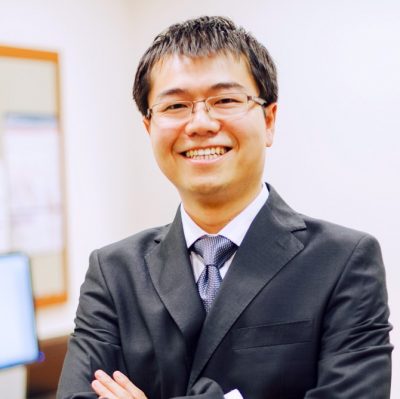
Yan Ning
Institution
National University of Singapore
Country
Singapore
Field
Environmental Sciences & Geology
For his research on harvesting materials from waste through rational catalytic design, Yan was awarded the 2017 Environment, Sustainability and Energy Division Early Career Award.
(Photo: National University of Singapore)
AWARDS
- 2017 Environment, Sustainability and Energy Division Early Career Award
Related articles

Recognizing Scientific Excellence With The Asian Scientist 100
These early career scientists and veteran researchers of the Asian Scientist 100 are making waves in diverse sectors of academia and industry, shedding light on natural phenomena and developing new technologies for a better world.

Mahouts In Myanmar Are Younger And Less Experienced, Study Shows
Political changes and urbanization may be threatening the traditions and training of elephant handlers, or mahouts, in Myanmar.

AI Predicts Effect Of Strain On Semiconductors
An international team of scientists has developed AI for predicting how the properties of semiconducting materials change under strain.

Asia’s Scientific Trailblazers: Eugene Fitzgerald
Newly-appointed CEO of the Singapore-MIT Alliance for Research and Technology Professor Eugene Fitzgerald lists his priorities for the R&D center.

NVIDIA Bolsters Singapore’s AI Ambitions
Singapore gets an AI boost with the launch of the Future Talents Program and AI.Platform@NSCC.

All Eyes On The Future
Supercomputers play a key role in artificial intelligence-enabled computer vision, says SenseTime co-founder Lin Dahua.

Quantum Computers On The Horizon
There's still a long way to go before they go mainstream, but quantum computers are firmly in the realm of reality and not science fiction, says IBM’s Dr. Christine Ouyang.

Old Age, New Tech
As the silver tsunami hits shores across the globe, robots and other assistive technologies are being deployed to meet the needs of the elderly.

NTU Singapore Deploys Its Ninth Satellite Into Space
The satellite, called the AOBA VELOX-IV, is meant to test a special low-light camera and an improved quad-jet pulsed plasma thruster system in space.